On November 20, 2026, a mathematician at Anthropic claimed to have solved the generalized Riemann hypothesis while working with the company’s Claude model. The proposed proof runs to roughly 250,000 pages. Its correctness had not been established as of November 24, when mathematician David Manderscheid used the claim to pose a question: Even if a proof is correct, what will it take for other mathematicians to understand and use it?
The distinction already matters for less famous problems. In October 2026, OpenAI released 722 mathematics research papers containing results generated by an internal AI model. According to Manderscheid, OpenAI retracted some papers after finding mistakes. He judged some of the remaining results potentially worthy of a Fields Medal, if they prove correct.
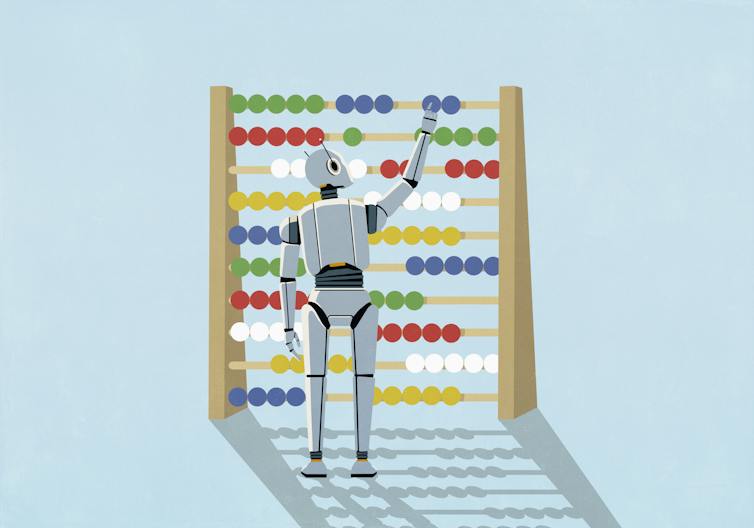
Proof-checking software such as Lean can verify a formal argument. It does not, by doing so, tell a reader which idea made the argument work. Manderscheid said that even some of the AI-generated work checked with Lean was difficult for human mathematicians to follow. He draws on mathematician Tao’s description of the next task as “digestion”: simplifying a proof, placing it in context and explaining it well enough for someone else to recognize where its reasoning might apply.
What shorter MRI scans owe to mathematics
Magnetic resonance imaging illustrates the practical value of that kind of understanding. Patients once had to lie still for half an hour or more while a scanner collected the measurements needed to construct an image. For children, that could be difficult without sedation.
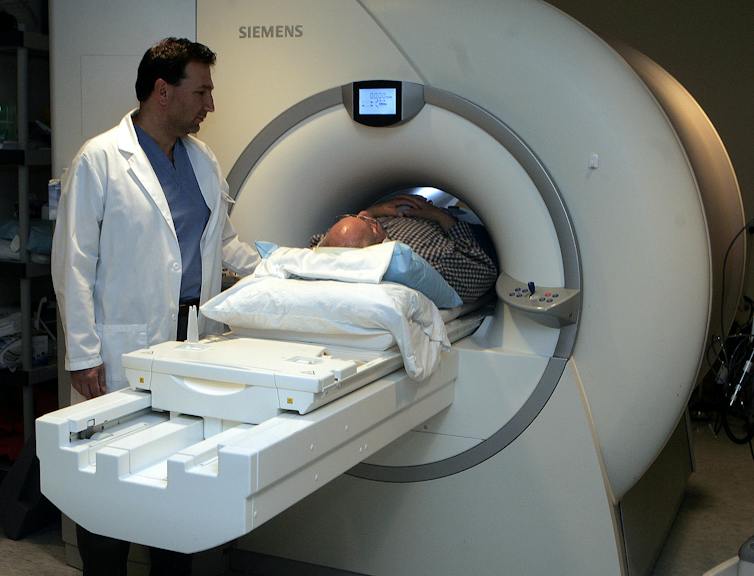
In the mid-2000s, researchers in mathematics, statistics and electrical engineering asked whether all those measurements were necessary. By exploiting similarities in the data, they showed how to reconstruct an image from far fewer samples than previously thought possible. The mathematics, known as compressed sensing, helped make shorter scans with better resolution possible.
The achievement began with recognizing what to ask, not simply solving a problem someone else had posed. In Manderscheid’s view, AI might have helped the researchers develop compressed sensing more quickly, but a model working alone would probably not have identified the question and developed the mathematics behind it. That is his assessment of the technology’s capabilities, not a finding from a test of AI systems.
What students could be asked to explain
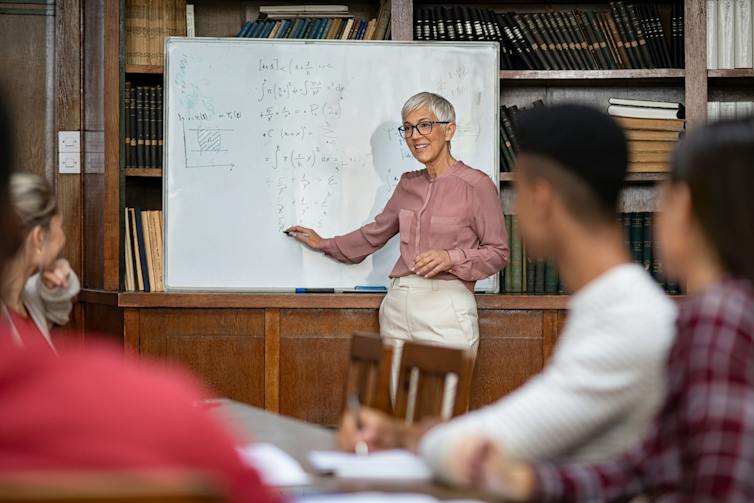
Manderscheid says some mathematicians want doctoral programs to give students credit not only for solving a problem but also for explaining why the solution works, both to fellow mathematicians and to researchers in other fields. In courses where AI can supply answers to standard homework problems, he suggests oral exams or class presentations as ways to assess a student’s reasoning. These are proposals, not adopted requirements.
For Manderscheid, the point is not to stop using tools that can produce answers. It is to preserve the part of mathematical training that an answer alone cannot demonstrate: knowing why a method worked here and when it might work somewhere else.