Earth’s first animal probably lived in an ocean more than 650 million years ago. Scientists cannot name it or say exactly what it looked like. But in a November 23, 2026, explainer, biologists Matthew Brown and Daniel Lahr describe one feature it must have had: different kinds of cells that stayed together and did specialized jobs as one body.
Movement and feeding alone do not make an animal. A single-celled amoeba can crawl, hunt and swallow prey. A sea sponge, by contrast, stays anchored to the seafloor and has no brain, heart or muscles. Yet its cells work together to pump seawater through tiny openings and capture bacteria for food.
What sponges can tell us
A sponge’s feeding cells, called choanocytes, each have a whiplike tail surrounded by a collar of tiny projections that trap food. They look remarkably like choanoflagellates, single-celled organisms that can feed in colonies and are the closest living relatives of animals.
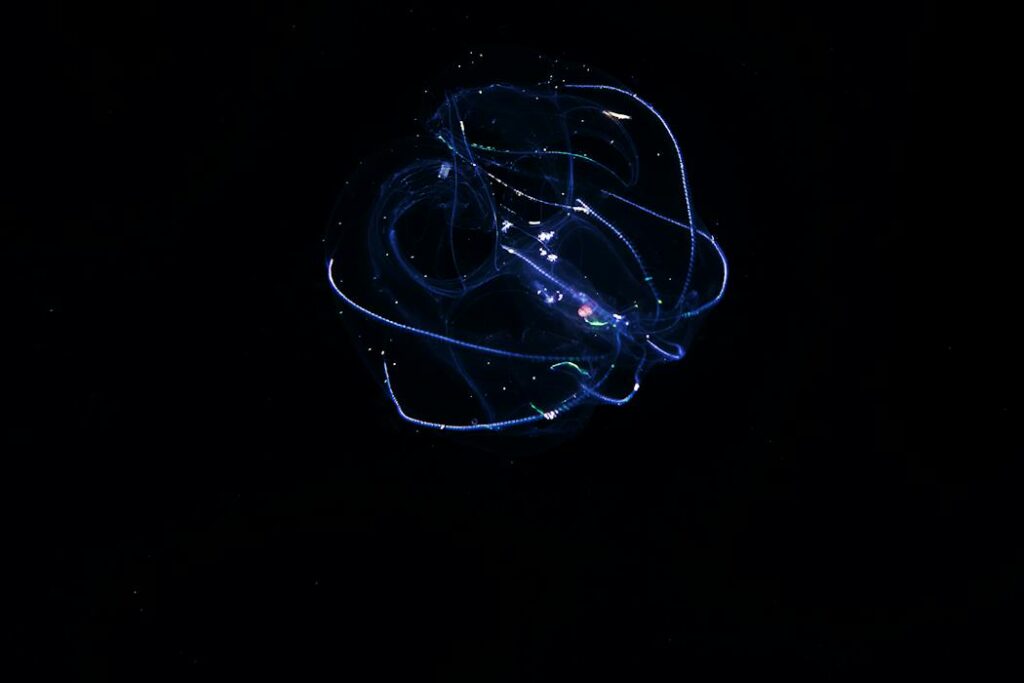
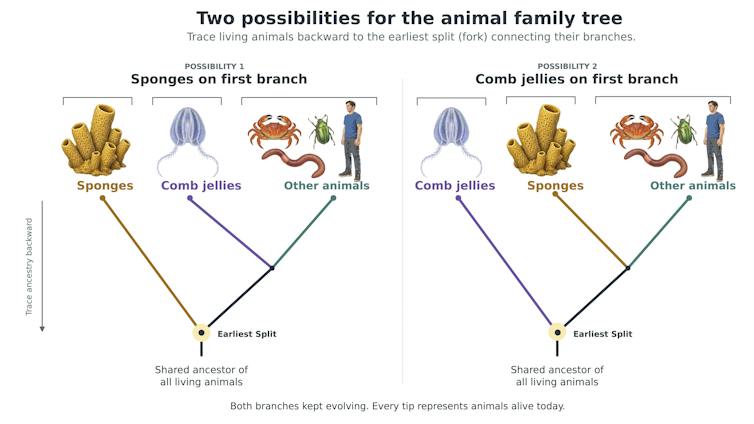
The resemblance offers a clue to how early animal cells may have fed, but it does not establish that the first animal was a sponge. Some studies place the sponge lineage on one side of the deepest split in the family tree of living animals, with all other animals on the other side. Other studies put comb jellies, shimmering ocean swimmers, on that first branch instead.
Neither tree would make a living sponge or comb jelly a portrait of the first animal. Both lineages have been evolving for just as long as ours since their common ancestor lived.
What fossils miss and genes preserve
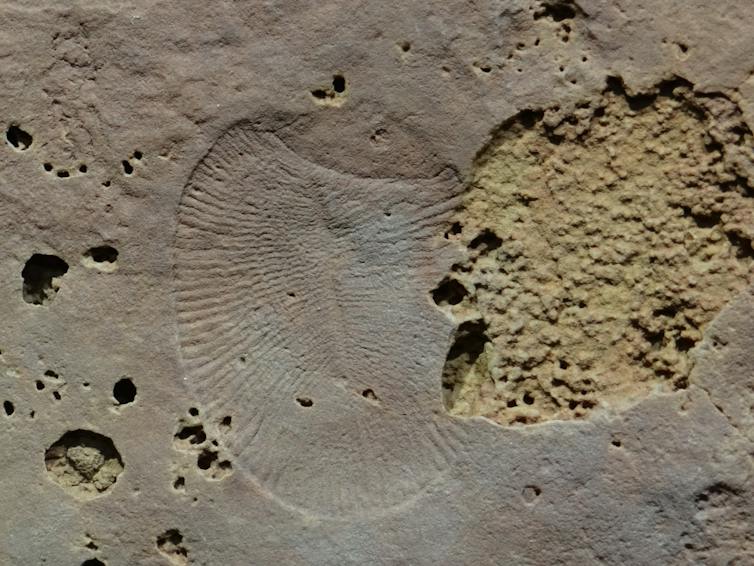
About 558 million years ago, a flat, ribbed animal called Dickinsonia lived in the sea. Its fossils preserve the outline of a body only a few millimeters thick. Yet Dickinsonia was almost certainly not the first animal. The earliest animals were probably small and soft, without shells, teeth or bones that fossilize readily. Even the setting matters: mud can bury remains before they decay, while waves can wash them away.
DNA offers a different kind of record. By comparing genetic changes inherited across generations, researchers can reconstruct family trees. Genes also offer clues to what cells could do. Single-celled relatives of animals already had genes that help cells stick together, send signals, sense their surroundings and switch other genes on or off.
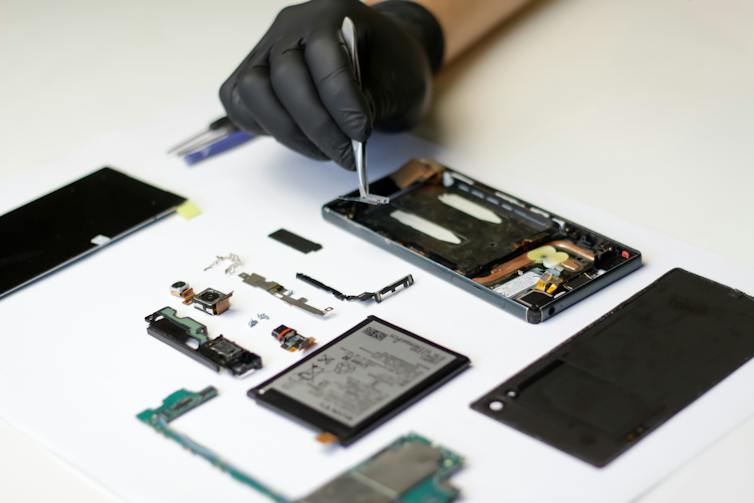
Biologist Iñaki Ruiz-Trillo and colleagues compare the transition to the development of the smartphone: cameras, telephones and computers existed separately before they were combined in one device. The first animal may likewise have brought existing abilities together in a new way. Its outline may never turn up in a rock, but many of the molecular tools that allowed its cells to cooperate still work in animal bodies today.