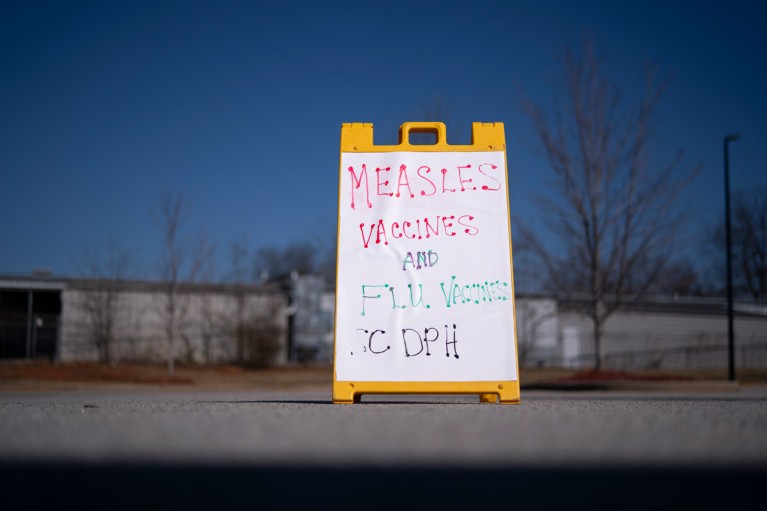
In a report published on 17 November 2026, the Pan American Health Organization (PAHO) announced that the United States had lost its measles elimination status. The outbreak had caused more than 5,700 infections and 10 deaths in the country that year. PAHO also determined that measles had been re-established in Mexico and Bolivia.
The United States had eliminated measles in 2000 following an intensive vaccination campaign. PAHO withdraws elimination status when one genetic variant of the virus is transmitted continuously in a country for at least 12 months. Genetic data indicated prolonged transmission of a single measles genotype in each of the three countries, rather than a series of unrelated, shorter outbreaks.
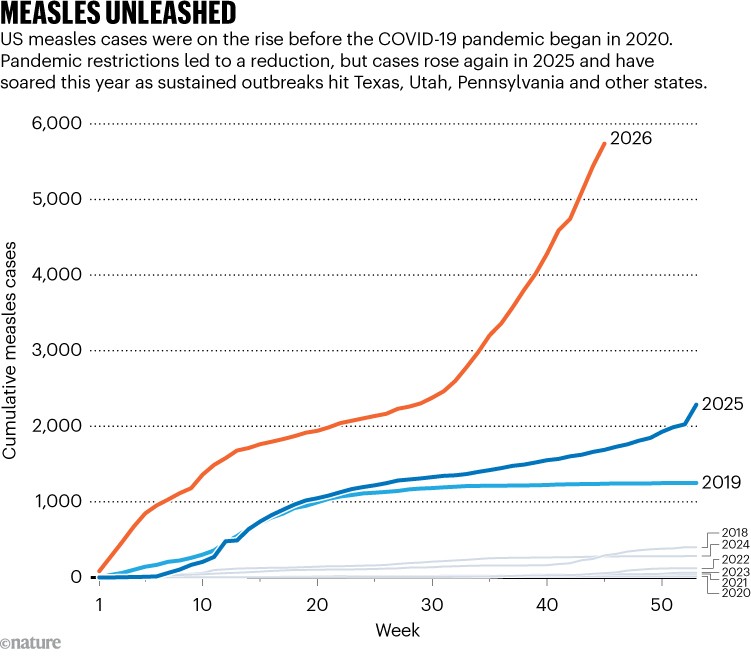
Across the Americas, PAHO recorded 58,213 confirmed cases as of 13 November 2026, compared with 12,596 during the same period in 2025. PAHO director Jarbas Barbosa said the situation required urgent attention. Epidemiologist Jennifer Nuzzo of Brown University warned that measles returning to one country increases the likelihood of increases elsewhere.
Adults and pregnancies are also affected. About 40% of US cases reported that year were in people aged 20 or older. In Pennsylvania, which the report identified as having the most cases, adults accounted for two-thirds of infections. Virologist Paul Offit of the Children’s Hospital of Philadelphia said adults who grew up when measles was not circulating could be vulnerable if they were not vaccinated as children.
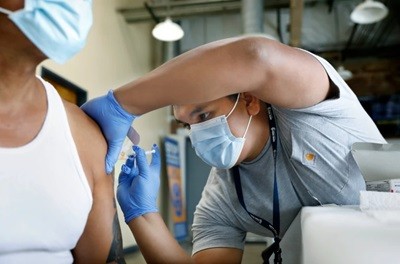
The report also described six cases of congenital measles in Pennsylvania that year, in which babies were born with infections acquired from their mothers. Almost 100 measles cases had been reported among pregnant people in the state. Neil Silverman, a maternal and fetal medicine specialist at the University of California, Los Angeles, noted that measles can raise the risk of pneumonia during pregnancy; severe illness can lead to pregnancy loss or preterm birth.
Researchers cautioned that falling measles vaccination rates could signal vulnerability to other infections. Silverman pointed out that the US measles vaccine is given together with vaccines against mumps and rubella in the MMR shot. His warning about other outbreaks is a concern, not a PAHO determination that those diseases have followed the same course.