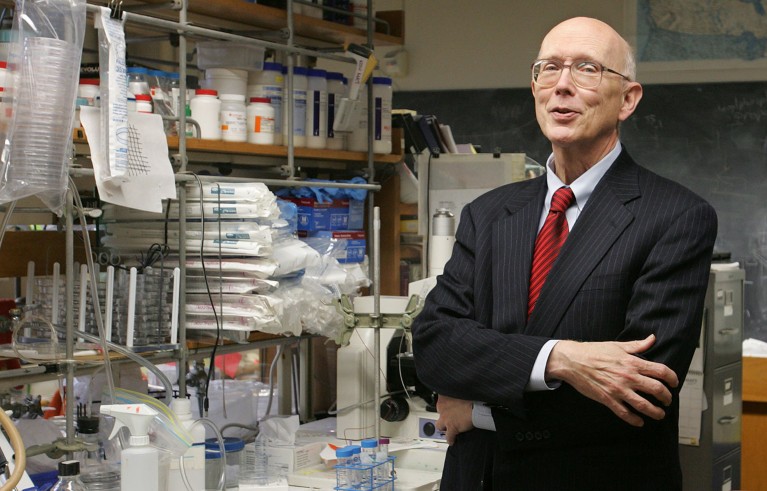
Chemist George Whitesides died on 19 November 2026 at age 87. His son George, a US congressman representing California, announced on X that Whitesides died at home surrounded by family. The death was reported on 23 November 2026.
Whitesides helped develop ways to pattern surfaces with molecules, work that contributed to advances in nanotechnology and microfluidic diagnostic devices. He and his research group also pioneered low-cost, paper-based “lab-on-a-chip” devices.
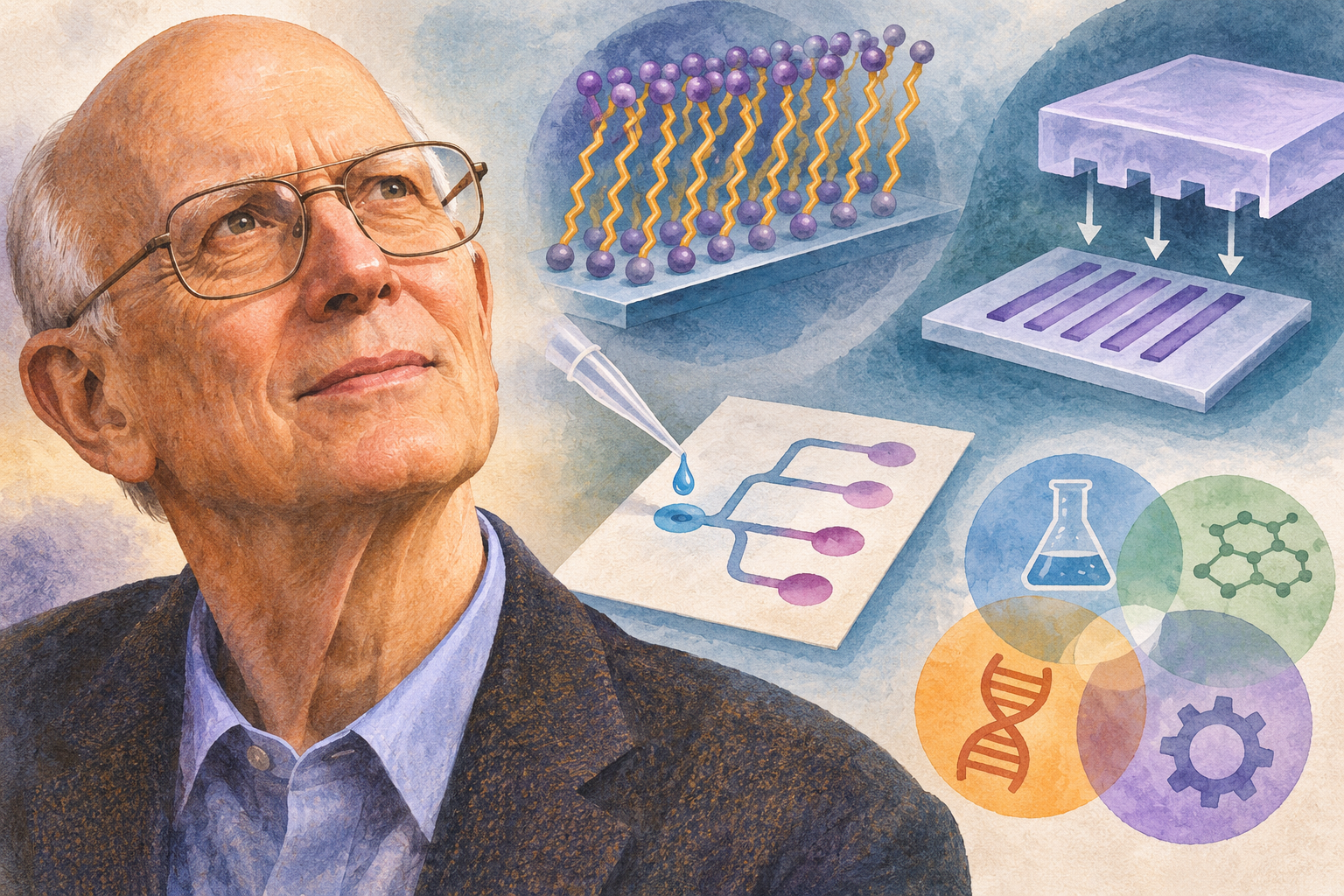
At the Massachusetts Institute of Technology, where he joined the faculty in 1963, Whitesides studied self-assembled monolayers: coatings just one molecule thick that form as molecules are drawn to a surface and to one another. He later developed soft lithography, using polymer stamps to transfer microscopic patterns onto surfaces. John Rogers, a Northwestern University materials scientist and former postdoctoral researcher in Whitesides’s Harvard lab, said the approach made this kind of research more accessible because it reduced the need for sophisticated cleanrooms and etching equipment.
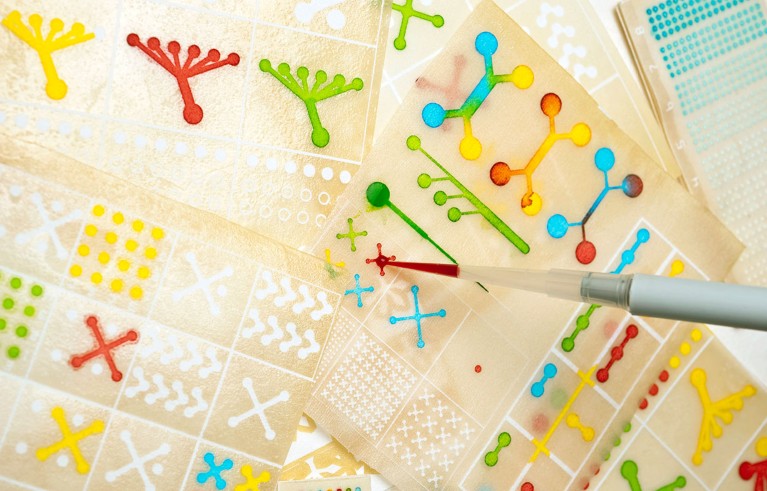
Born in Louisville, Kentucky, in 1939, Whitesides studied chemistry at Harvard University and earned a PhD at the California Institute of Technology. He trained hundreds of scientists in his laboratories at MIT and, later, Harvard. Stanford chemical engineer Zhenan Bao wrote that his work showed how important problems can cross the boundaries between chemistry, materials science, biology and engineering.