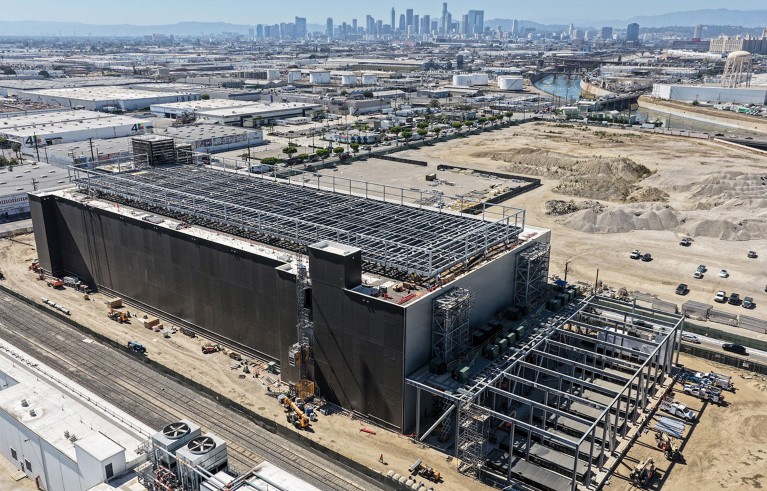
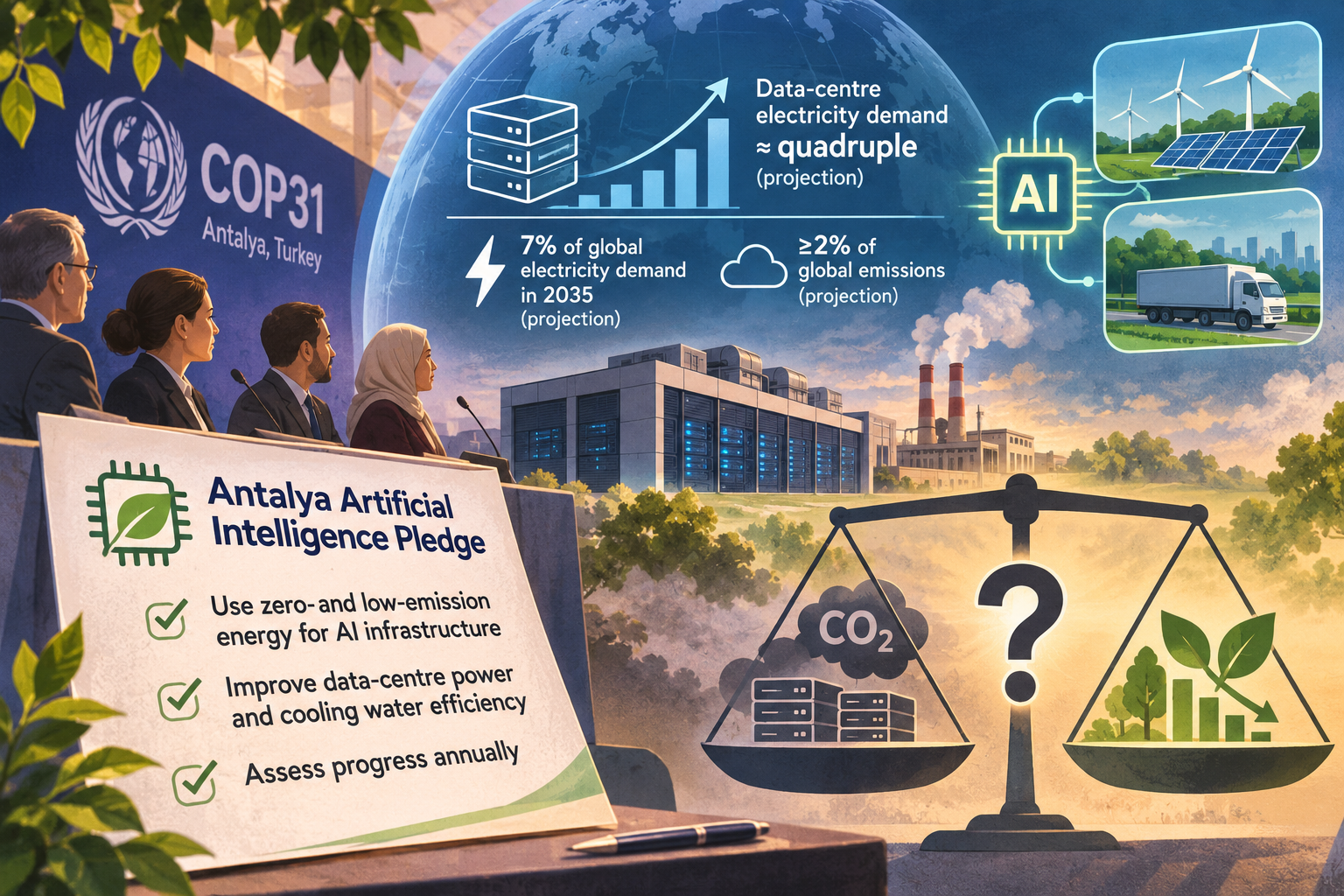
As reported on 16 November 2026, ten countries at the COP31 climate summit in Antalya, Turkey, had joined a pledge to limit emissions from artificial intelligence infrastructure while exploring ways AI could help cut emissions elsewhere. The Antalya Artificial Intelligence Pledge is a commitment to act, not an enacted emissions rule.
Germany, Brazil, South Korea and Turkey joined alongside Andorra, Colombia, Luxembourg, Sierra Leone, Somalia and Uganda. The pledge calls for AI infrastructure to use zero- and low-emission energy and for data centres to use power and cooling water more efficiently. Participating countries will assess progress annually. Turkey said it would aim to power its data centres with 60% low-carbon sources.
The scale of the challenge is uncertain but potentially substantial. A BloombergNEF report cited in the original reporting estimated that global data-centre electricity demand would almost quadruple over the following decade, reaching 7% of global electricity demand in 2035 and accounting for at least 2% of worldwide emissions. Those figures are projections, not measured outcomes. The reporting also noted that some large US technology firms were seeking gas-fired power plants to supply data centres rather than waiting for grid connections.
More than 80 organizations had endorsed the pledge, including Nokia and Telefónica, according to a tracker from the International Telecommunication Union, one of the organizers. None of the frontier AI firms had joined. Jill McArdle of the advocacy group Beyond Fossil Fuels warned that the pledge could give major technology companies a “green stamp” without requiring them to address their infrastructure’s climate impacts.
AI might also help reduce emissions—for example, by supporting renewable-energy integration on power grids or improving logistics. But whether those potential savings could outweigh AI’s own climate impacts remains unknown, said Eric Masanet, a mechanical engineer who studies decarbonization at the University of California, Santa Barbara.