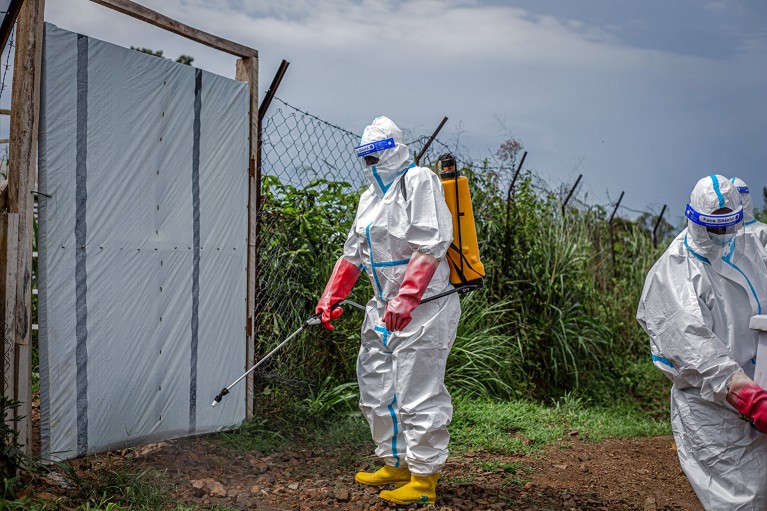
As reported on 12 November 2026, researchers had used anonymized mobile-phone data and test records to reconstruct the first weeks of a Bundibugyo Ebola outbreak in the Democratic Republic of the Congo (DRC). The study’s authors say their findings reveal early signals that disease-surveillance systems failed to detect.
The DRC declared the outbreak on 15 May, after laboratory tests confirmed Bundibugyo Ebola in a person from Ituri province. The study reports that the person had shown symptoms as early as 25 April. Around the time of the declaration, suspected cases were being reported in parts of Ituri and neighbouring North Kivu province. On 17 May, the World Health Organization declared the outbreak a public health emergency of international concern, citing infections among health-care workers, the geographical spread of cases and clusters of undocumented deaths.
The researchers examined travel between areas using anonymized phone data. They found that movement out of Mongbwalu, Bunia and Rwampara between 24 April and 24 May helped predict which health zones would report infections by 1 June. Areas near the initial centres were at greater risk; risk also rose 150–200 kilometres away. Study co-author Pierre Akilimali, an epidemiologist at the National Institute of Public Health in Kinshasa, linked the more distant pattern to travel along established routes to larger towns and cities. The authors interpret the findings as evidence that population movement was an important driver of early spread, although researchers only suspect the virus had been circulating in the region months before the outbreak was declared.
By the reporting date, confirmed infections had exceeded 10,000 and 5,198 people had died, making it the largest Bundibugyo outbreak recorded so far. There were no licensed vaccines or approved treatments specifically for Bundibugyo.