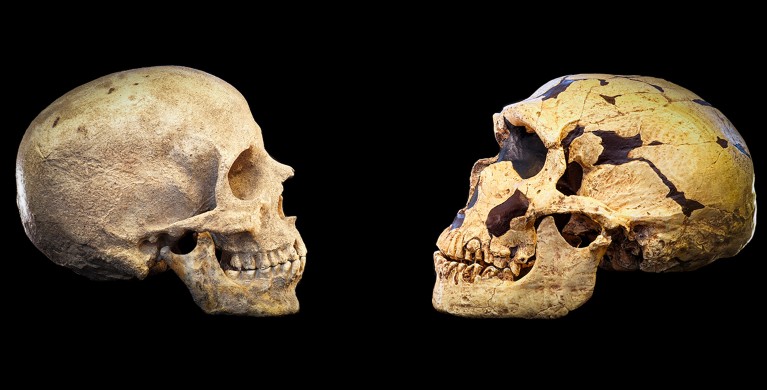
A genetic variant inherited from Neanderthals is associated with a smaller region of the modern human brain involved in visual processing, according to research reported on 16 November 2026. People who carry the variant also have a reduced risk of schizophrenia, though the report does not quantify that association.
Evolutionary geneticists Hugo Zeberg and Svante Pääbo of the Max Planck Institute for Evolutionary Anthropology compared ancient DNA with data from the 1000 Genomes Project and UK Biobank, among other sources. They found the variant in all five detailed Neanderthal genomes available to researchers, but not in the Denisovan genomes examined. Among modern humans, it occurs only in people with non-African ancestry. The researchers said the 59.7-kilobase stretch of DNA containing it is too long to be likely to have persisted from an older ancestor shared by humans and Neanderthals.
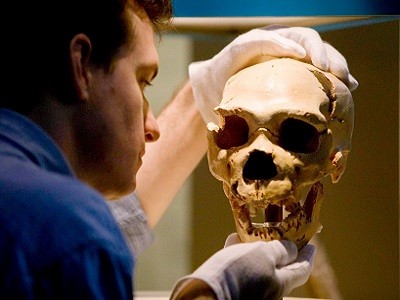
The variant, first identified in 2019, is a deletion of four nucleotides on chromosome 14. In the study published in Proceedings of the National Academy of Sciences USA, each copy was associated with 0.85 cubic centimetres less volume in the cuneus, part of the occipital lobe. That is the opposite of what the researchers might have expected: Neanderthals tended to have slightly larger occipital lobes than modern humans. The findings describe an association with brain anatomy, not a demonstrated mechanism for the difference.