
In results reported on 17 November 2026, a light-and-sound headset did not slow cognitive and functional decline in people with Alzheimer’s disease compared with a sham device. Its manufacturer, Cognito Therapeutics, presented the findings at the Clinical Trials on Alzheimer’s Disease meeting in Boston on 16 November.
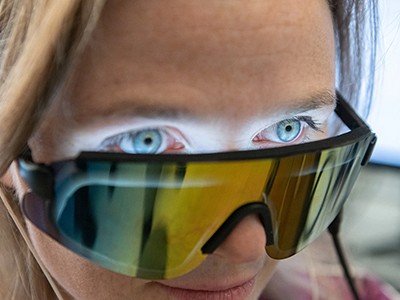
The Spectris AD device pairs flashing-light goggles with headphones that make rhythmic clicking sounds. It is designed to induce gamma brain-wave activity, which has been linked to attention and memory. In the trial, 673 people with Alzheimer’s disease were randomly assigned to use an active or sham device for 60 minutes a day over 12 months.
On a 156-point scale measuring cognition and the ability to carry out daily activities, scores fell by an average of 8.97 points among active-device users and 8.82 points among sham-device users. The main trial result therefore did not show a benefit.
Cognito chief executive Christian Howell said participants with mild, rather than moderate, cognitive impairment showed a more promising result: decline was 42% slower among active-device users than sham-device users in that subgroup, a difference averaging three points. He said the company planned to seek US Food and Drug Administration approval in 2027.
Researchers cautioned against treating the subgroup finding as proof that the device works. Eric McDade, a neurologist at Washington University School of Medicine in St. Louis, called the trial negative and said a follow-up study in the mildly impaired group would be the appropriate next step. Rob Howard, a dementia specialist at University College London, described the subgroup data as exploratory. He also noted that a smaller 2024 trial had failed to show a slowing of cognitive and functional decline.