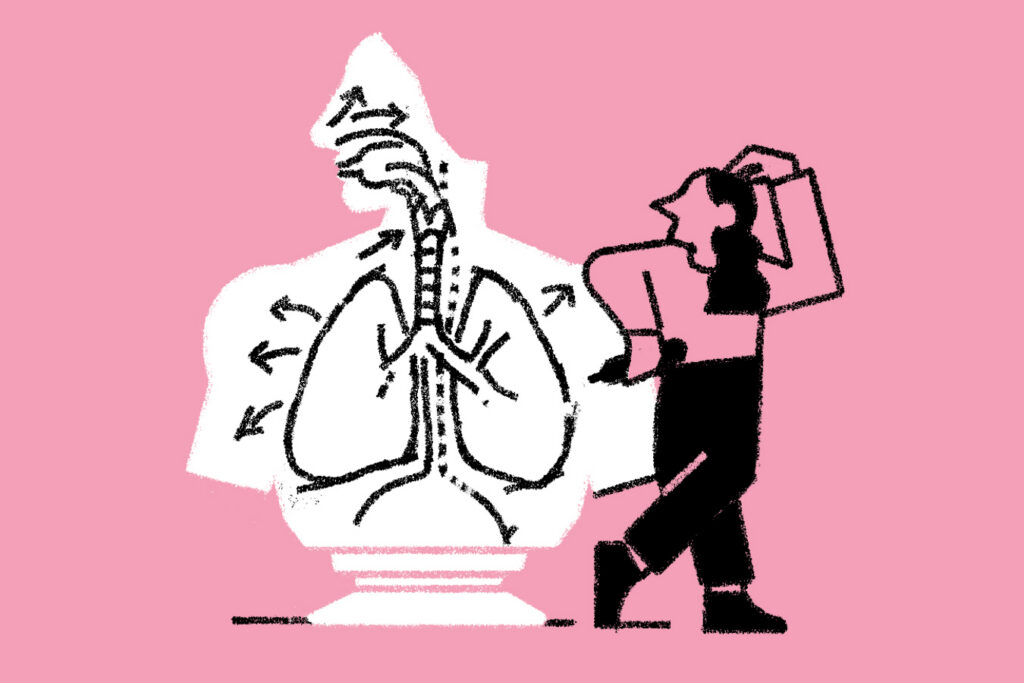
Every time you swallow, your vocal folds close and a flap called the epiglottis folds down over the entrance to your airway. Both movements help keep food out of the windpipe. They matter because food on its way to the stomach passes through the same chamber at the back of the throat as air on its way to the lungs.
In a November 25, 2026, column, Hannah Fry traces that crossing to an air-gulping fish that lived more than 420 million years ago, before vertebrates ventured onto land. A pouch on the belly side of its gut, just beneath the mouth, absorbed oxygen and evolved into a lung. Mammals, birds, amphibians and reptiles inherited that arrangement. The nose, meanwhile, remained closely connected to the front of the brain through its smell receptors. In humans, that leaves the route from nose to lungs crossing the route from mouth to stomach.
The two routes are more effectively separated in many other mammals. In dogs and cats, the larynx, or voice box, sits high in the throat and reaches into the back of the nose. Food can pass on either side of it. Human babies also start life with a high larynx, which helps them breathe through the nose while suckling.
During the first six months of life, the human larynx descends in the neck. It no longer meets the back of the nose, leaving a shared chamber that helps us produce speech but exposes the airway to food from the mouth. Other animals can choke, too, but Fry describes humans as the most vulnerable mammals and puts the global toll from choking at roughly 162,000 people a year.
The reflex that protects this crossing can persist even during surgery. An ear, nose and throat surgeon told Fry that a slight touch in a patient’s throat could still trigger the vocal folds to close even when an EEG monitor registered very little brain activity.