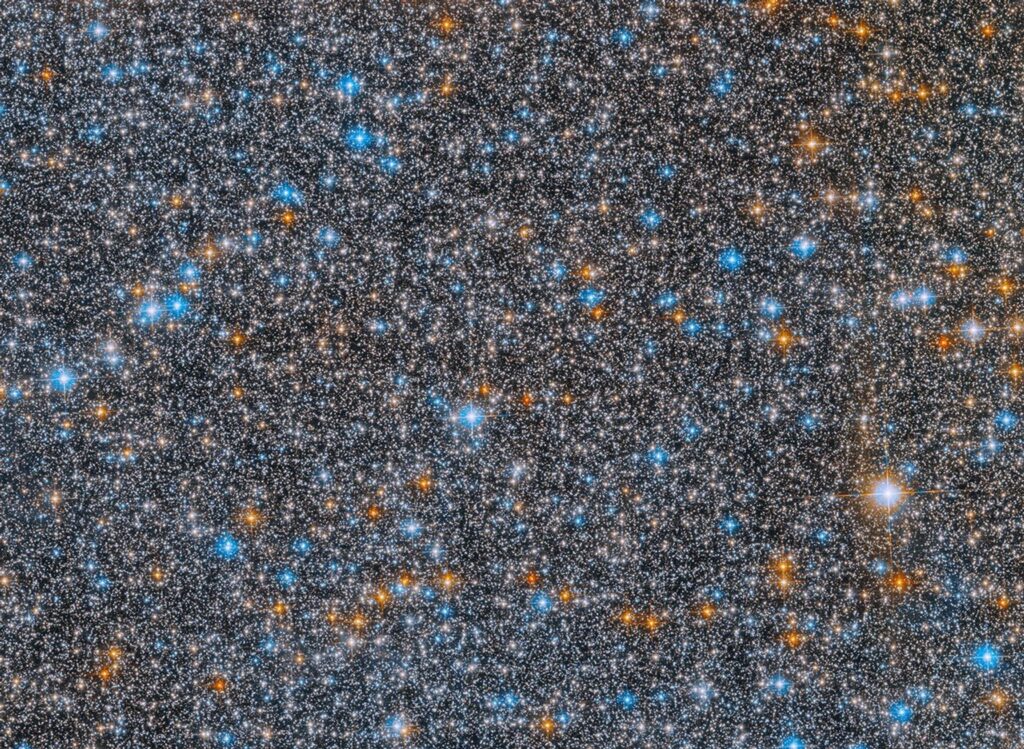
NASA’s Hubble Space Telescope has resolved individual stars in crowded fields toward the Milky Way’s central bulge. The images give astronomers a record of those stars before the Nancy Grace Roman Space Telescope monitors the same region for brief changes in starlight that could reveal planets.
Roman will look for gravitational microlensing. When a foreground star passes close to the line of sight to a more distant star, the foreground star’s gravity bends and magnifies the distant star’s light. The way the light brightens and fades can tell astronomers about the foreground star and may reveal a planet orbiting it.
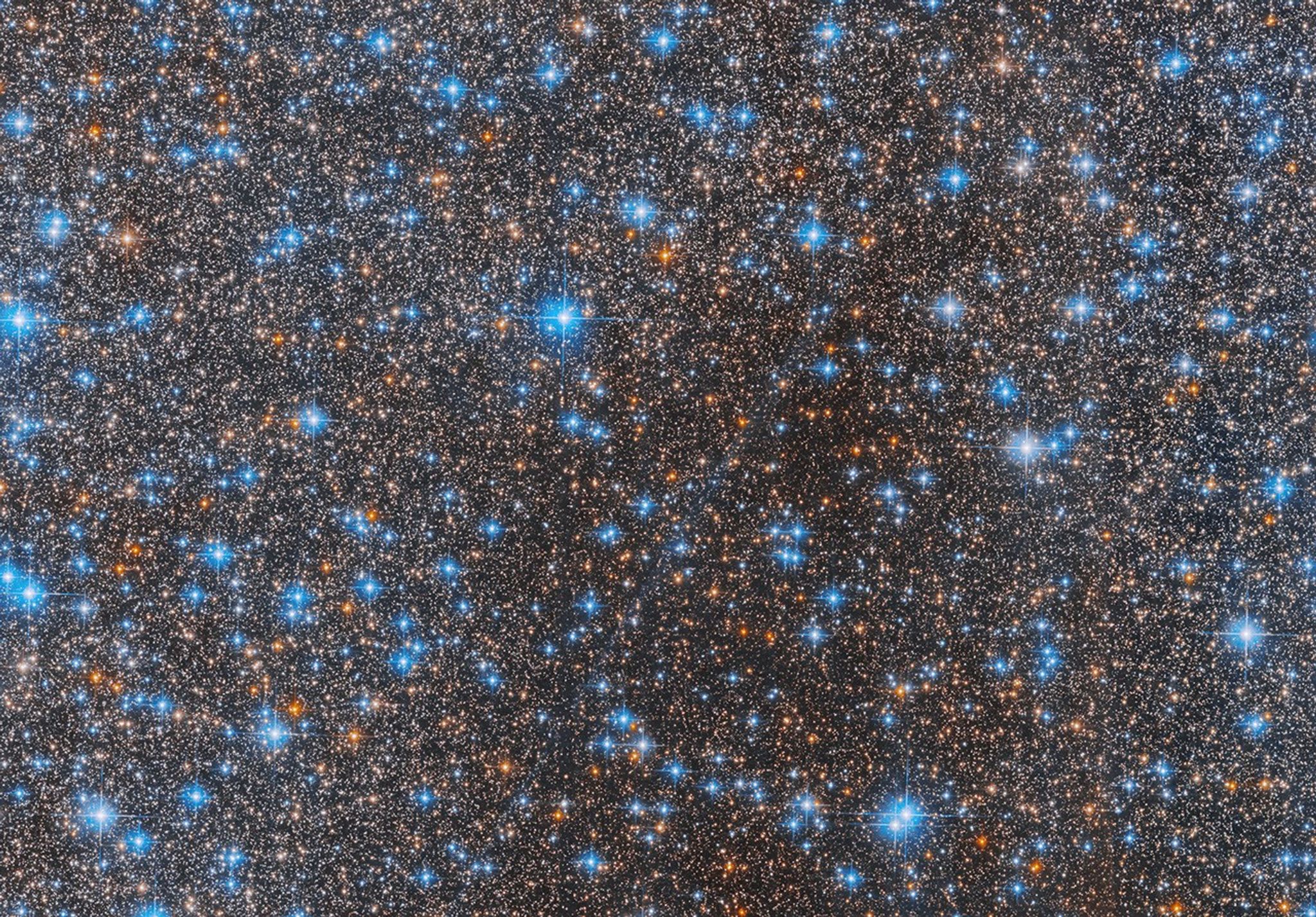
Hubble observed the fields in red visible light and near-infrared light, wavelengths Roman will also detect. If Roman records a microlensing event months or years later, astronomers can compare its measurements with Hubble’s earlier view to help interpret the signal.
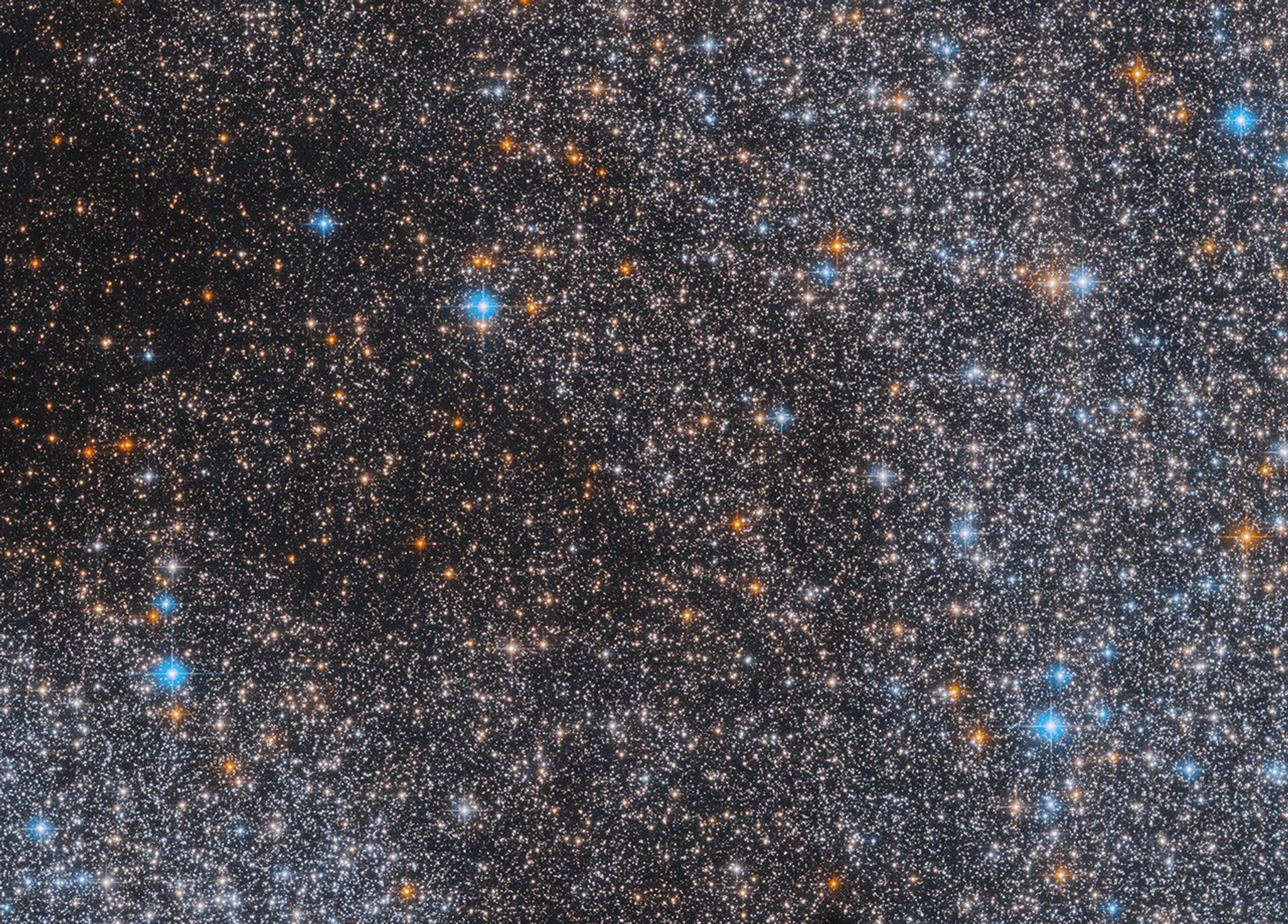
The Milky Way’s bulge contains nearly a quarter of the galaxy’s stellar mass. In more distant galaxies, the light of individual bulge stars blends together. Our own bulge is close enough for Hubble to distinguish stars even where few are apparent at first glance: in one image, a dark patch cutting across the field resolves into a multitude of faint stars.
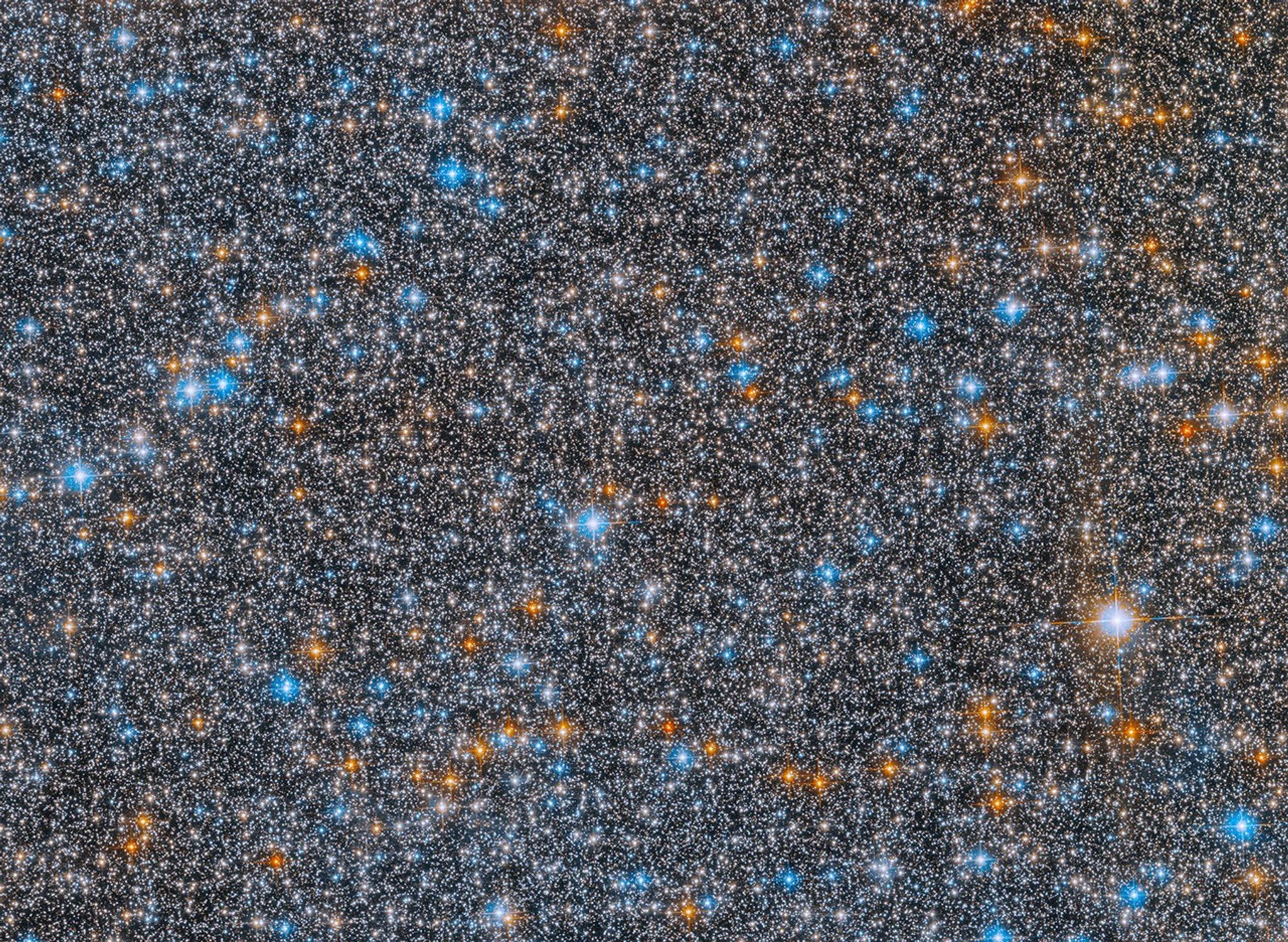
The observations come from Hubble program 17776 (S. Terry), designed to support Roman’s searches for exoplanets, black holes and neutron stars. They build on earlier Hubble surveys, including the WFC3 Galactic Bulge Treasury Program, which measured stellar brightness, positions and motions, and the Sagittarius Window Eclipsing Extrasolar Planet Search, which examined 180,000 bulge stars.