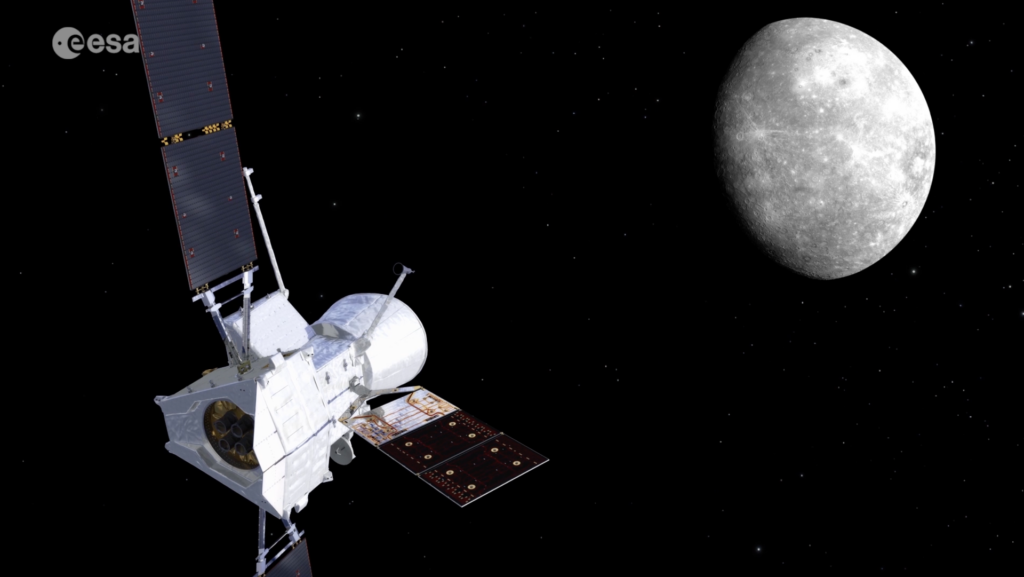
On November 24, 2026, the European Space Agency (ESA) said BepiColombo would need no extra thruster burns after a software glitch cut short its braking maneuver at Mercury. Mission scientists had confirmed on November 21 that the joint European-Japanese mission was in orbit and transmitting data to Earth. Only one other mission, NASA’s MESSENGER, had orbited Mercury before, from 2011 to 2015.
BepiColombo’s thrusters were supposed to fire for 37 minutes to slow the spacecraft. ESA confirmed its trajectory after the shortened burn and said the spacecraft was safe. ESA Director General Josef Aschbacher said on November 24 that engineers had isolated the glitch and replanned the remaining maneuvers. The mission’s two probes were still on track to separate on December 9.
Eight years to reach orbit
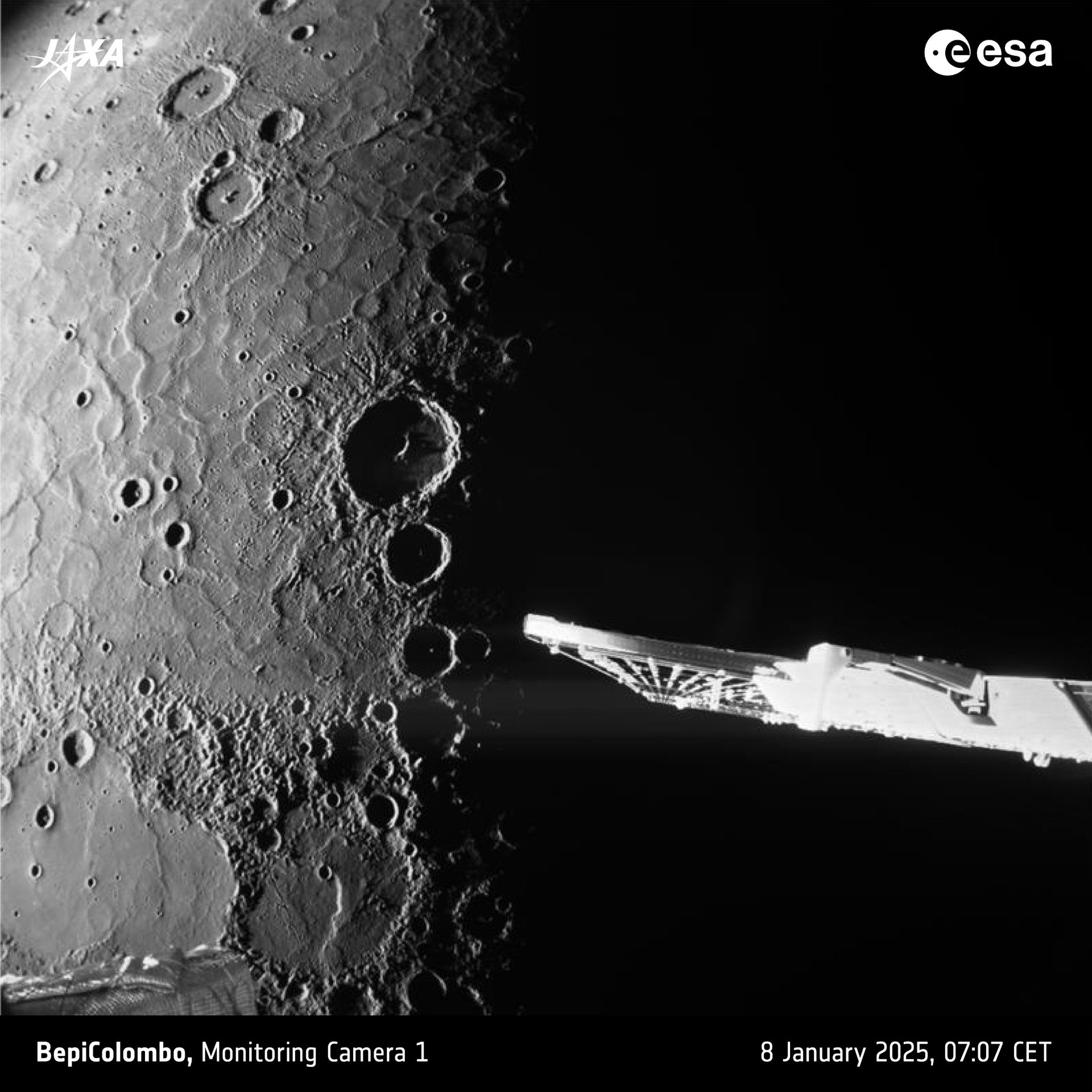
The probes launched together on an Ariane 5 rocket in October 2018. Their eight-year route took them past Earth, the moon and Venus, and past Mercury itself six times. During a January 2025 flyby, BepiColombo photographed Mercury’s north pole.
Reaching Mercury is partly a problem of slowing down: as a spacecraft travels toward the sun, the sun’s gravity accelerates it. Mercury orbits about 36 million miles (58 million kilometers) from the sun, roughly one-third of Earth’s distance. According to ESA, the flybys helped BepiColombo control its speed so it would not overshoot the planet.
Two polar orbits for science
The probes were still joined when they entered orbit. After separation, the Japan Aerospace Exploration Agency’s Mercury Magnetospheric Orbiter, known as Mio, was expected to follow a highly elongated path over Mercury’s poles. ESA planned to guide its Mercury Planetary Orbiter into a lower, more nearly circular polar orbit in March 2027. From there, it would circle Mercury about once every two hours, with science operations expected to begin in April.
Over a planned year of observations, the probes would map Mercury from different vantage points. Their instruments would observe the planet in X-rays, gamma rays and ultraviolet light and measure its magnetic field. Scientists hope to use those measurements to investigate how Mercury formed, what its interior contains, what generates its magnetic field and how much tectonic activity continues. A separate radio experiment would use precise measurements of the spacecraft’s position and orbit to test Einstein’s theory of general relativity.