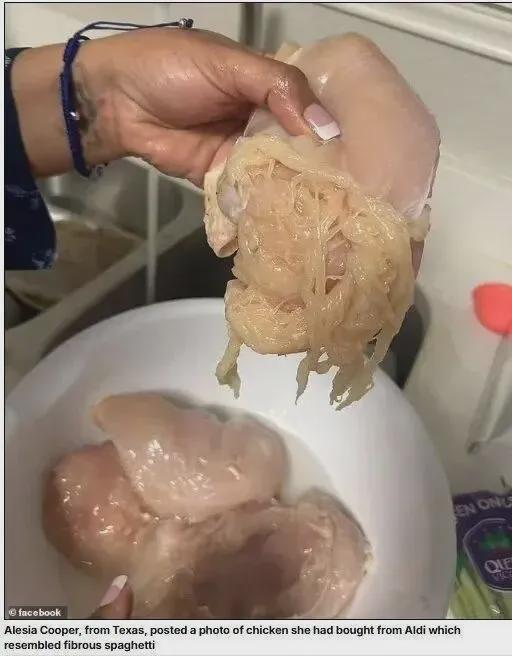
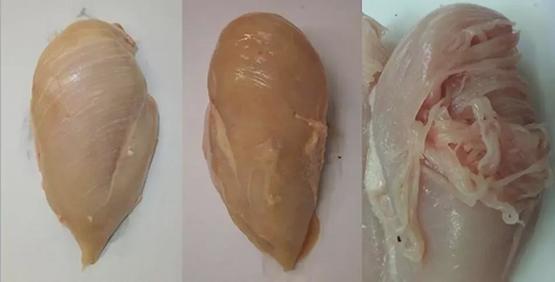
In March 2024, Texas mother Alesia Cooper posted a photo of a raw chicken breast that had separated into dangling strands. The appearance prompted online speculation about what the meat was. The original article identifies it instead as a muscle abnormality known as spaghetti meat.
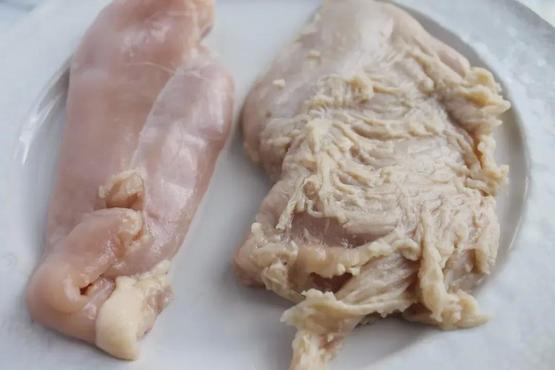
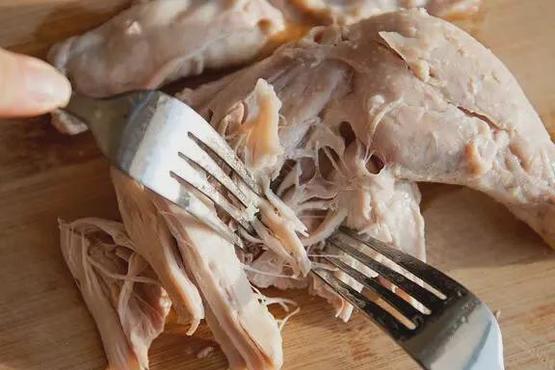
Chicken breast contains long muscle fibres grouped into bundles. Connective tissue, including a network of collagen, helps hold those bundles together. Cooked chicken can be pulled into strands, but a normal raw breast does not readily fall apart that way.
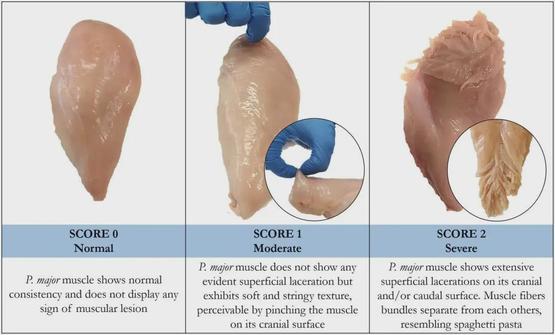
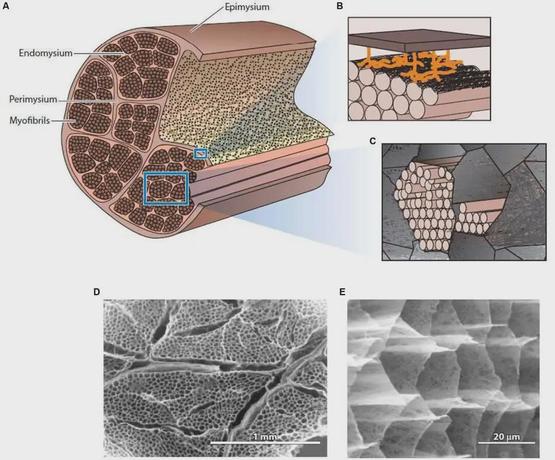
Researchers examining spaghetti meat have observed damaged or breaking-down muscle fibres and changes in the surrounding connective tissue. Some collagen fibres appear thin, loosely arranged or insufficiently mature. With less effective connections between muscle bundles, the raw meat can separate along its fibres, particularly when handled.
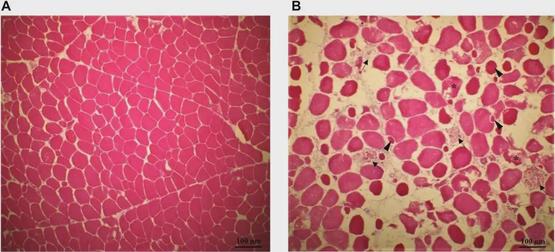
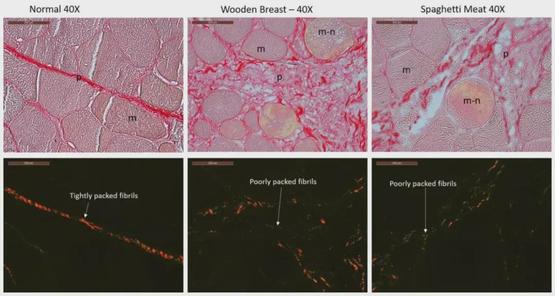
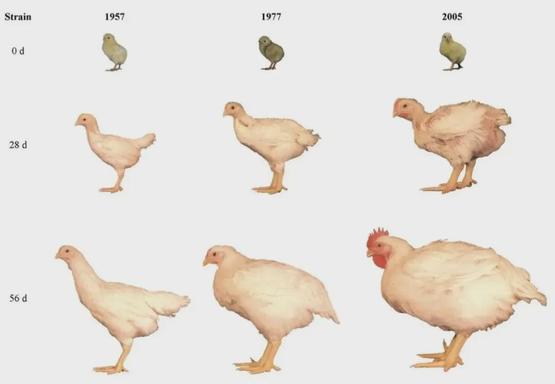
One proposed contributor is the rapid growth of modern broilers. As breast muscles enlarge, their blood supply may not keep pace with the need for oxygen and nutrients. Researchers think the resulting metabolic stress, followed by damage and incomplete repair, may help explain the altered tissue. That is a proposed mechanism, not a complete explanation: why some chickens develop spaghetti meat while others do not remains under study.
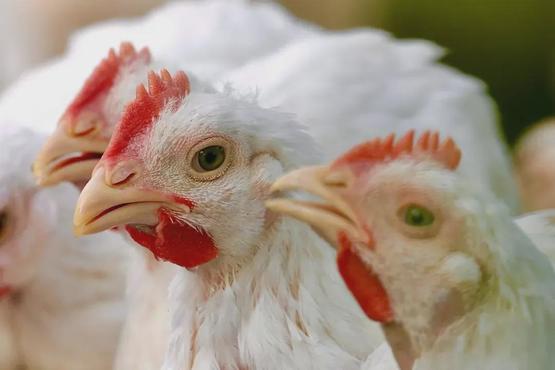
For context, the article cites U.S. National Chicken Council figures showing that broilers averaged about 112 days and 1.1 kg at market in 1925, compared with 47.5 days and about 3 kg in 2025. Those industry averages describe a long-term change; they do not establish what happened in any individual chicken breast.