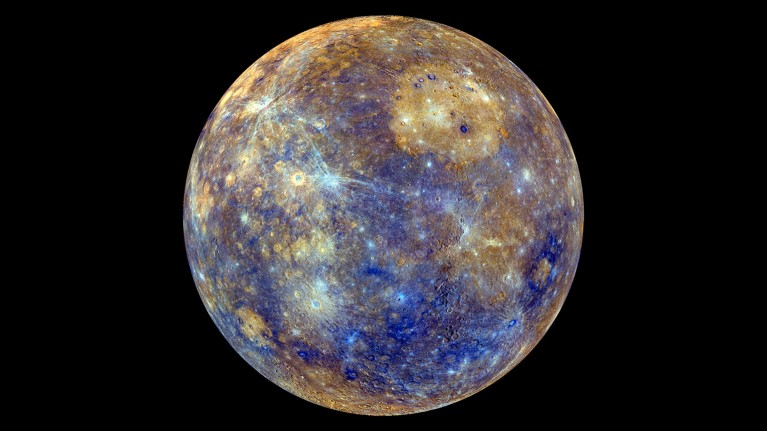
The European–Japanese BepiColombo mission reached Mercury after a journey that began with its October 2018 launch. On 21 November 2026, the European Space Agency (ESA) announced that a European-built module had entered orbit around the planet, beginning several months of manoeuvres. BepiColombo is the second mission to enter Mercury orbit, following NASA’s MESSENGER mission, which operated there from 2011 to 2015.
The mission’s two scientific probes remain joined for now. The Japan Aerospace Exploration Agency’s MIO probe is scheduled to separate when the spacecraft reaches its prescribed orbit on 9 December 2026. MIO is planned to travel in an elliptical orbit ranging from 500 to 11,000 kilometres above Mercury, studying its magnetic field and its interaction with the solar wind.
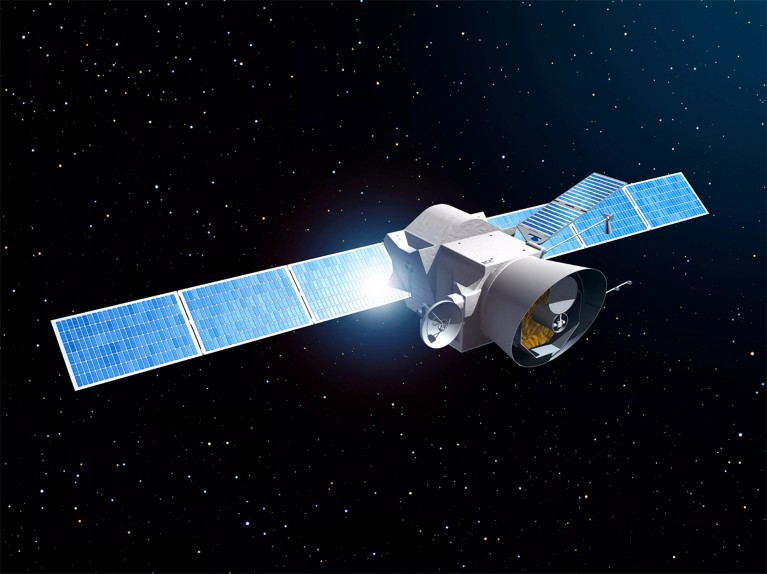
ESA’s Mercury Planetary Orbiter (MPO) is then expected to descend gradually to an orbit 400–1,500 kilometres above the planet by March 2027. Its instruments are intended to study Mercury’s surface continuously from there.
The journey also provided an opportunity to test instruments. Mission scientists pointed MPO’s Mercury Imaging X-ray Spectrometer (MIXS) at the Crab Nebula, the remnant of a supernova witnessed from Earth in 1054. Emma Bunce, a University of Leicester plasma physicist and BepiColombo mission scientist, described MIXS as the first X-ray imaging device sent on an interplanetary mission. She said reaching Mercury requires a prolonged journey because the spacecraft must move closer to the Sun without accelerating past its destination.