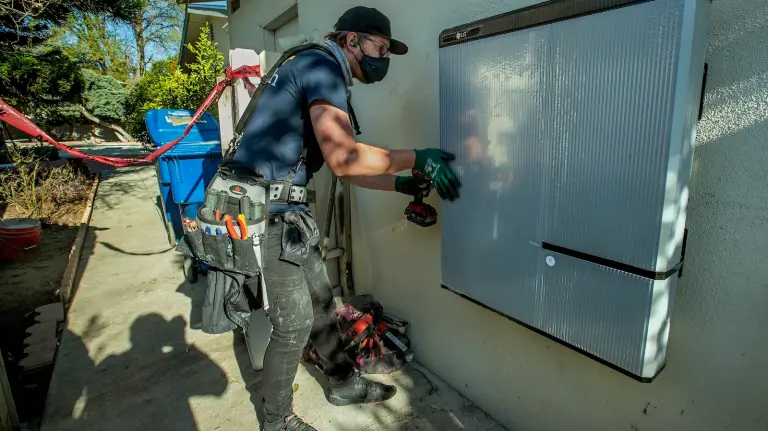
As reported on November 21, 2026, households at Veridian at County Farm in Ann Arbor were preparing to enroll in what DTE Energy described as Michigan’s first residential virtual power plant pilot. In the coming weeks, the utility expected to begin remotely coordinating participating homes’ batteries so stored solar power could be sent to the grid when needed.
Veridian is a fossil-fuel-free development designed for homes to produce about as much solar energy as they consume. According to developer Thrive Collaborative, 44 of its 120 planned market-rate homes had been built with solar panels and batteries. Another 50 affordable housing units had been built but did not yet have batteries. DTE expects nearly 100 battery-equipped homes to participate eventually.
Sonnen USA, which makes the batteries installed at Veridian, is helping DTE operate the pilot. Sonnen executive Geoff Ferrell said the network is expected to supply up to about 300 kilowatts for three hours. The test should help DTE determine how much power the batteries can deliver and when; that capacity is an expectation, not a measured result from the pilot.
DTE chief executive Joi Harris said the project could test a lower-cost way to meet growing electricity needs and improve reliability. Resident Mitch Hall said participants would receive payment, but DTE had not provided exact compensation figures by the time of the report.
Virtual power plants coordinate distributed resources such as home batteries to help meet periods of high demand. Their broader savings remain projections: the Brattle Group estimated that harnessing 524 gigawatts of distributed energy resources through such networks could save households an average of $122 a year by 2050. The Veridian pilot has yet to establish what benefits it will deliver in Michigan.