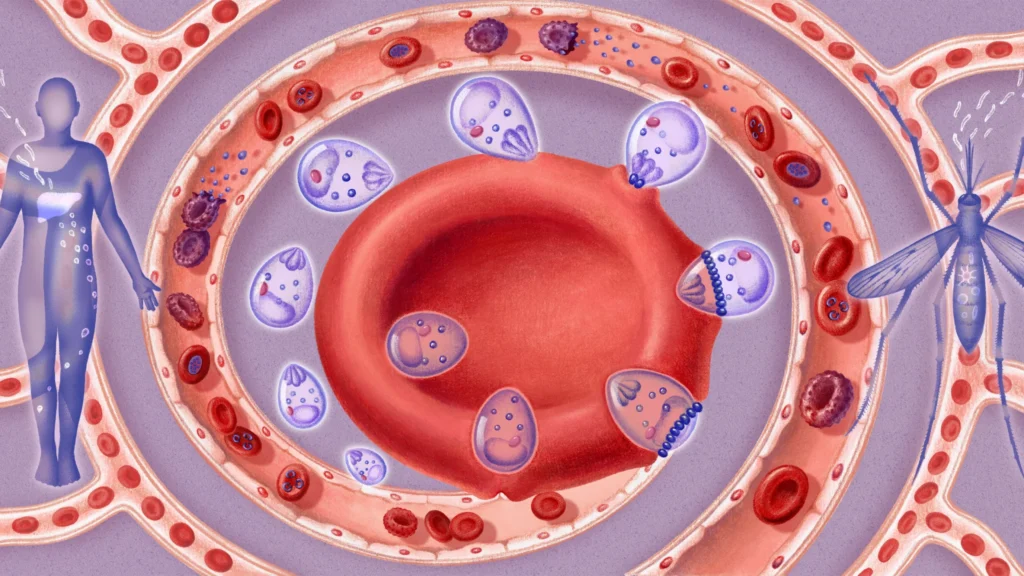
Reported October 23, 2026. Researchers in Chi-Min Ho’s lab at Columbia University used cryo-electron microscopy to examine the moving junction, the protein structure that helps malaria parasites enter red blood cells. The work provides a more detailed view of an invasion process that takes less than a minute and had been difficult to capture at this scale.
The parasite, Plasmodium, places multiple protein anchors on a red blood cell. The team examined the four protein components of an anchor and proposed a model for how they reshape the cell membrane: three proteins injected into the cell form a wedge beneath its surface, while a fourth connects the structure to the parasite. The resulting forces displace membrane lipids and change the membrane’s curvature, allowing the parasite to pass through before the membrane seals behind it.
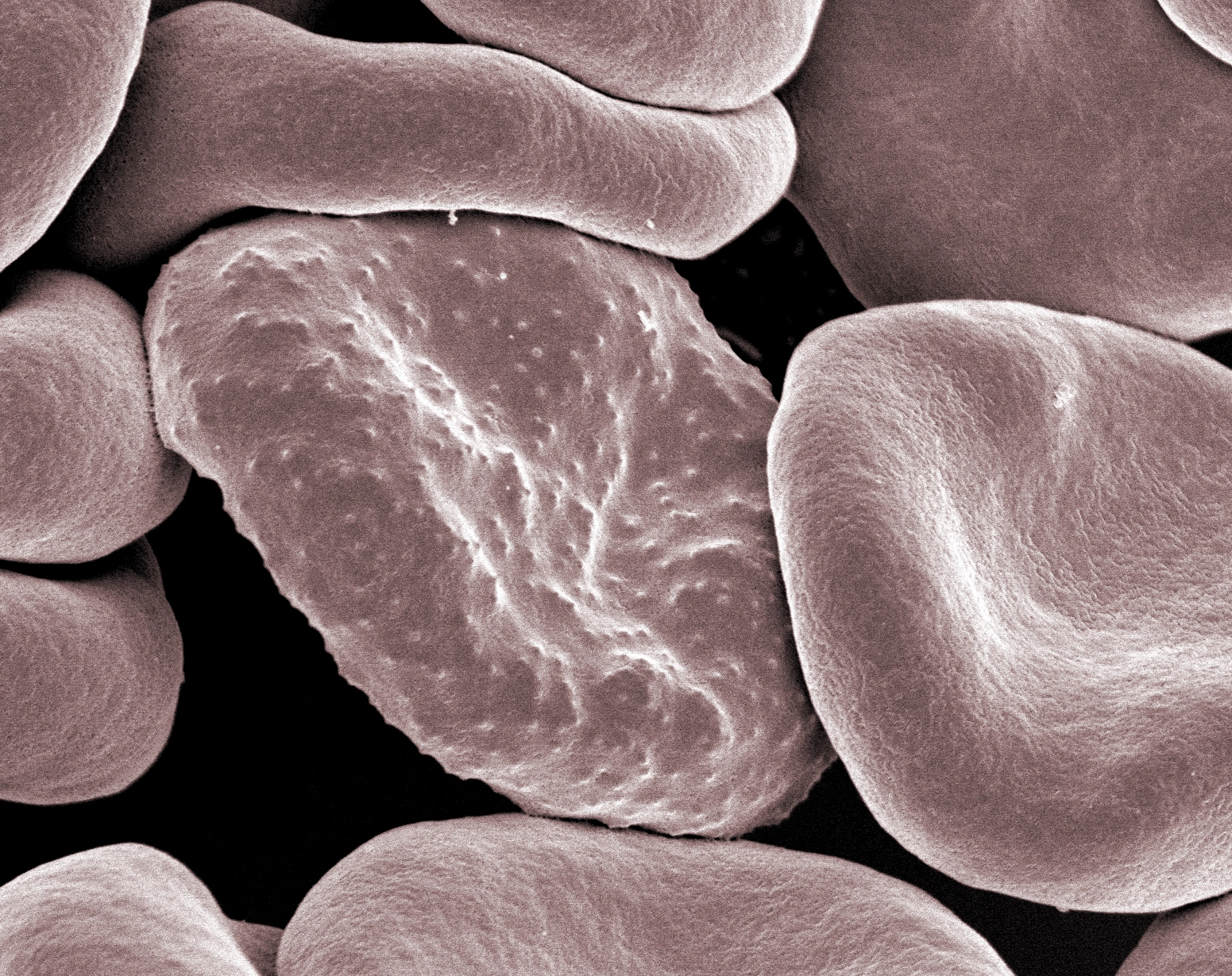
The researchers also designed an inhibitory protein intended to block the moving junction. In test-tube experiments, it prevented Plasmodium from entering red blood cells. Its safety and effectiveness have not been tested in animal models, so it is not an established malaria treatment.
The invasion machinery could offer a target for drug research, but timing is a challenge. Molecular parasitologist Christiaan van Ooij noted that a drug would have only a roughly 60-second invasion window in which to act, unless it remained effective in the body long enough to intercept the parasite. Researchers are also interested in whether related parasites use similar machinery; that possibility does not yet establish a treatment for those infections.