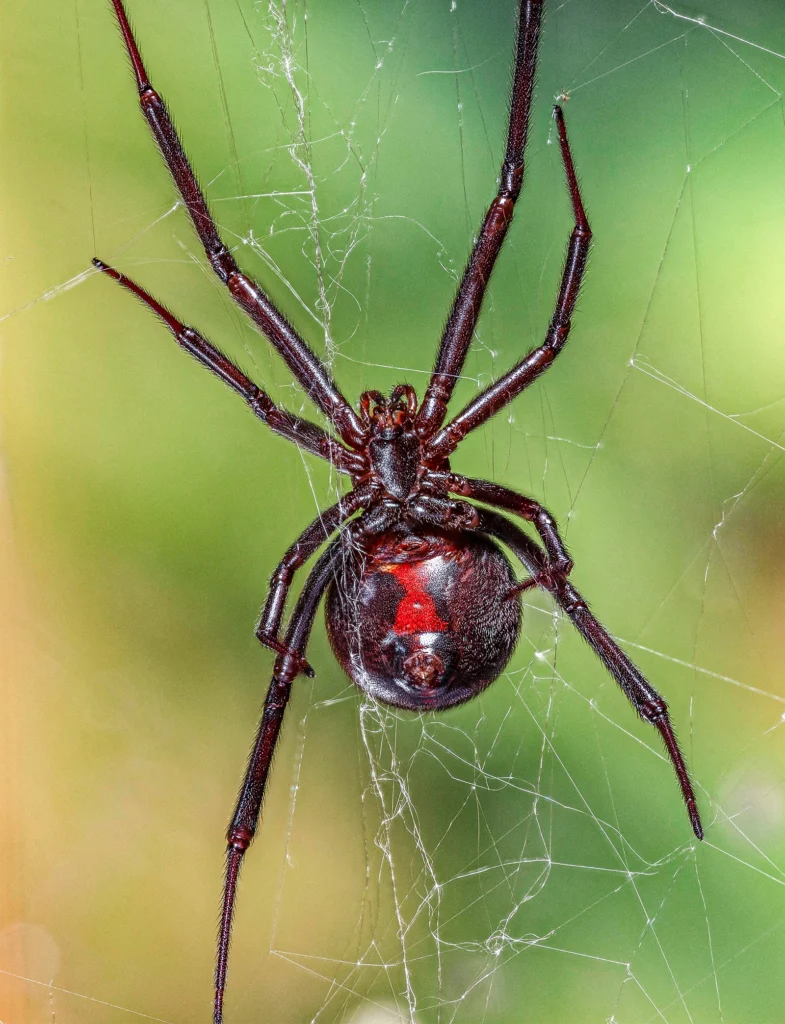
In reporting dated October 29, 2026, researchers described a molecular step that may help explain how spiders turn liquid proteins into strong silk. Their work with black widow spiders points to a role for condensates: dense, gel-like assemblies that form before the proteins become solid fiber.
A spider stores silk proteins, called spidroins, in a liquid mixture inside its silk glands. To examine the transition from liquid to thread, a team led by Gregory Holland at San Diego State University used nuclear magnetic resonance spectroscopy to study liquid silk material and condensates collected from the spiders’ glands. The researchers also studied solid fibers and used protein-structure modeling and molecular dynamics simulations.
When the team added phosphate to liquid silk material, parts of two amino acids—arginine and tyrosine—began interacting weakly. The interactions displaced water and helped bring the proteins together into a denser material. The team detected the interaction in solid fiber as well, suggesting that it helps guide silk proteins toward their final structure. The simulations further suggested that these amino acids sit near bends in the fiber’s strengthening beta-sheet structures.
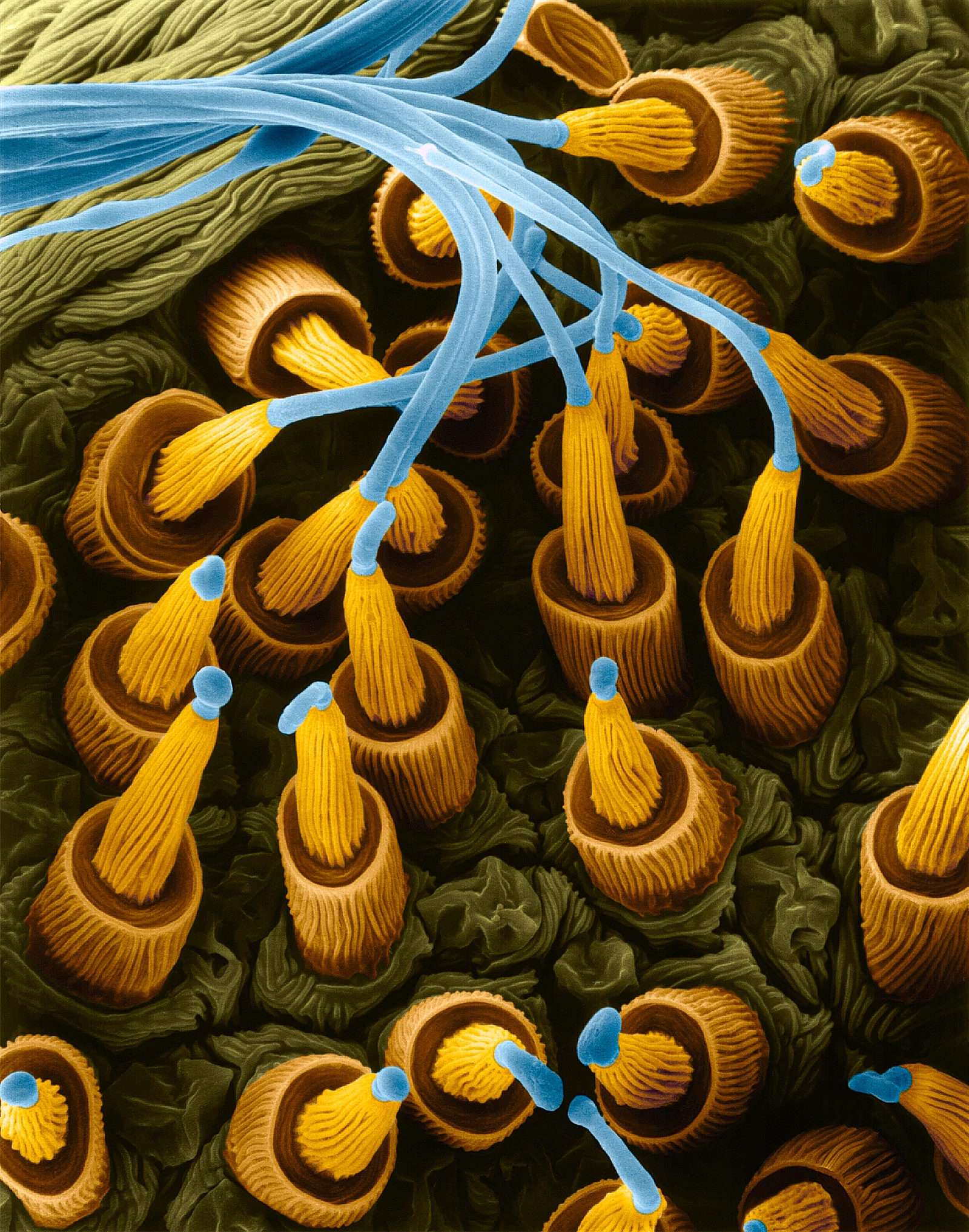
The findings do not establish every step of silk formation. Gregory Holland said structures proposed in earlier explanations, including micelles and liquid crystals, may also form during processing—and may coexist rather than appear in a fixed sequence. Researchers have not mapped all the relevant amino-acid interactions or identified every trigger beyond phosphate.
That uncertainty matters for attempts to make spider silk. Laboratory-made silk has not matched the strength of natural spider silk, even when researchers use the same amino-acid sequence to make its proteins. Understanding how spiders assemble those proteins could help explain what the synthetic process is missing; it does not yet mean that equivalent fibers can be manufactured.