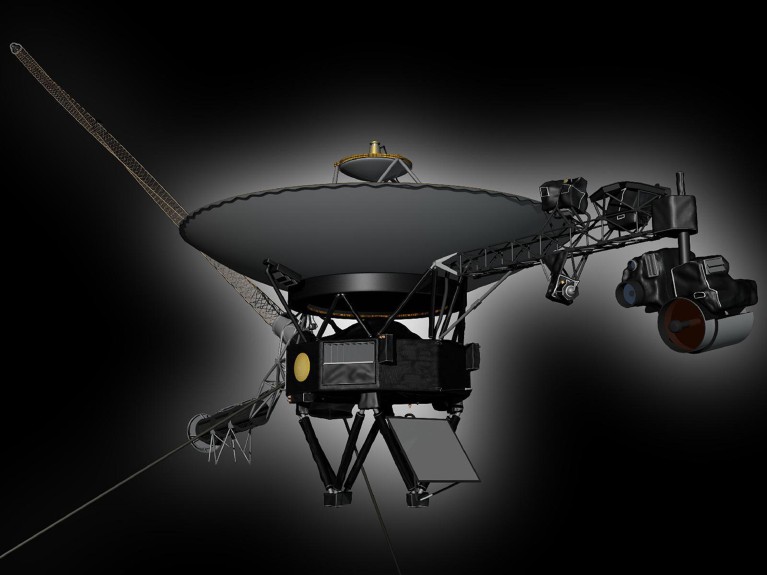
As reported on 17 November 2026, NASA’s Voyager 1 was approaching a distance of one light day from Earth. It was expected to reach that mark—about 25.9 billion kilometres—at 5:16 a.m. EST on 18 November. A signal travelling at the speed of light would then take at least 24 hours to reach the spacecraft from Earth.
Launched in 1977 alongside Voyager 2, Voyager 1 crossed beyond the Sun’s heliosphere in 2012; Voyager 2 followed six years later. Both probes continue to return direct measurements from interstellar space, although their dwindling power supplies have forced mission controllers to switch off instruments. Communications with Voyager 1 are expected to end in 2029 and with Voyager 2 in 2031, according to the report.
The surviving instruments have detected changes in magnetic fields and energetic particles associated with solar disturbances reaching beyond the heliosphere. Researchers are investigating why magnetic fields around the spacecraft rose sharply after a pressure front arrived around 2020, then fell six years later. Jamie Rankin, a Princeton University space physicist and the missions’ deputy project scientist, said the observations suggest the Sun’s influence can be felt farther out than some had anticipated. Whether other stars similarly affect interstellar space remains an open question.
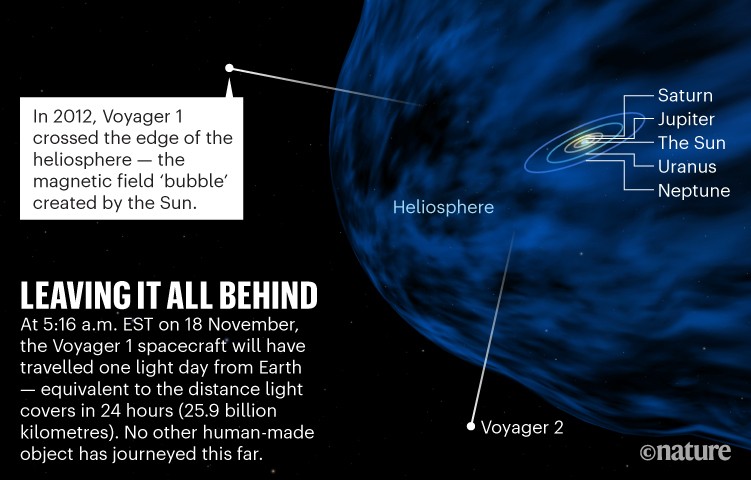
The milestone is vast on a human scale but small compared with interstellar distances: Deana Weibel, an anthropologist who studies space exploration, noted that Proxima Centauri is about 4.2 light years away.