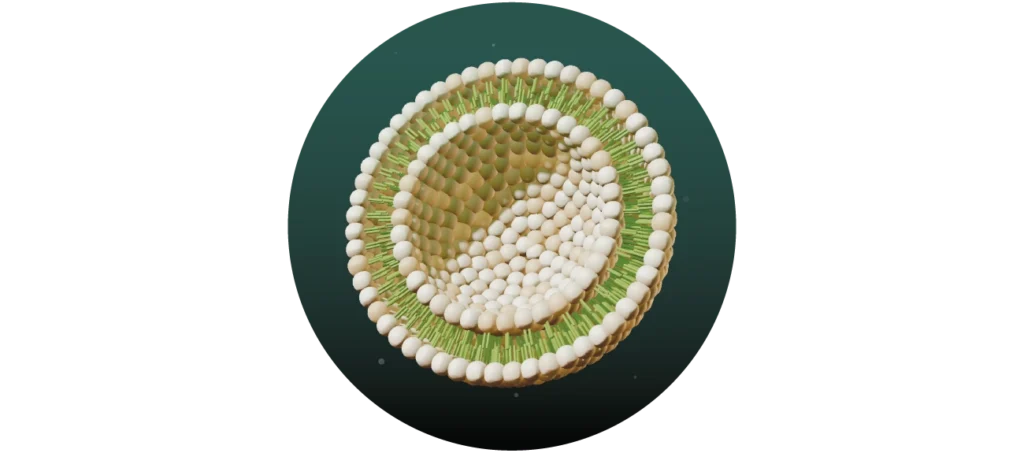
As reported on November 10, 2026, the “lipid-first” hypothesis proposes that compartments may have played a central role in life’s origins—not just by holding early chemistry together, but potentially by allowing chemical systems to evolve.
Molecules with one end attracted to water and the other repelled by it can assemble into bubbles. A compartment could keep interacting molecules close enough to sustain reactions that might otherwise be too dispersed, said Bruce Damer, an astrobiologist at the University of California, Santa Cruz.
In a computer model published in 2000, Doron Lancet of the Weizmann Institute of Science and Daniel Segrè, now at Boston University, explored whether bubbles could pass their mixtures of molecules to daughter bubbles. The modeled mixtures could vary and compete: faster-growing bubbles divided more often, meeting the model’s requirements for natural selection. That was a simulation, not an experimental demonstration that lipid-based life existed.
Researchers also disagree about what the first compartments might have been made of. Proposed alternatives include mineral walls and membrane-free droplets called coacervates. Damer and biochemist David Deamer continue to investigate lipids in a hot-spring scenario, in which repeated drying and refilling might have helped simple molecules form more complex systems.
The lipid-first account faces substantial objections. University of Chicago biochemist Jack Szostak said there is no experimental evidence that a lipid-based system can evolve and questioned how even simple lipids would have formed on early Earth. A 2010 analysis also suggested that bubbles might pass on their molecular compositions too inaccurately for natural selection to work. Szostak, who favors an RNA-based account of life’s origins, nevertheless agrees that compartments would have been needed to keep related molecules together.