In its October 8, 2026 report on its annual Climate Tech Companies to Watch list, MIT Technology Review highlighted firms working on renewable power, batteries, geothermal energy and nuclear reactors. The selections reflect technologies the publication considers promising—not a finding that every planned project will succeed.
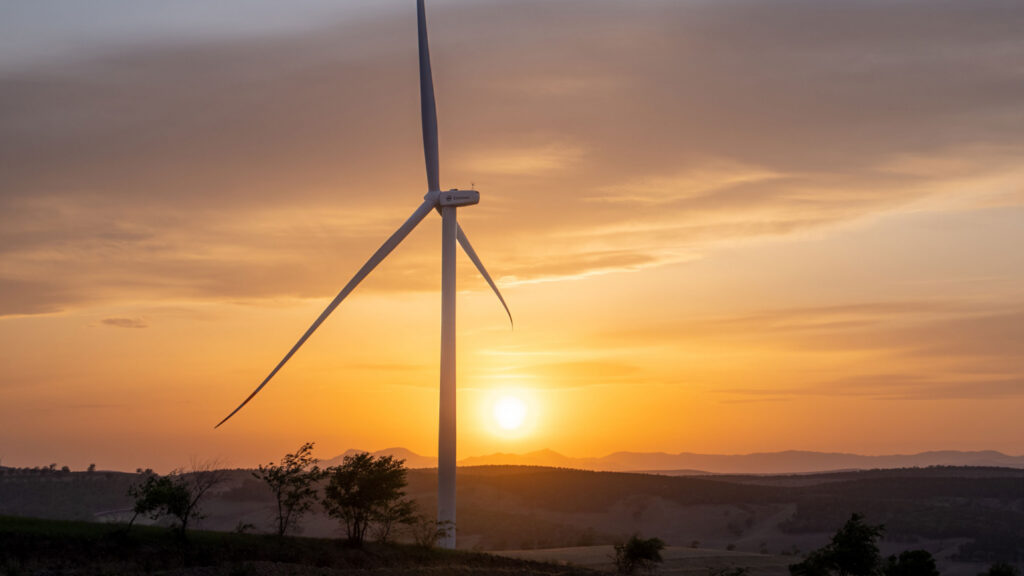
China’s role in energy technology features prominently. Envision Energy, appearing on the list for a second time, has installed more than 100 gigawatts of wind power and more than 50 gigawatt-hours of battery storage worldwide. The company has projects in Germany, Brazil and Australia, with work planned in Vietnam.
Battery maker WeLion New Energy announced a laboratory result in 2025 of 824 watt-hours per kilogram, more than three times the energy density of a standard lithium-ion battery, according to the report. That is a lab result, not a commercial battery specification; the report cautions that such results are difficult to scale. WeLion is also developing semi-solid-state batteries.
Demand for reliable power, including for data centers, is another theme. US company Fervo Energy uses horizontal drilling and hydraulic fracturing to expand where geothermal power can be deployed. It went public in May 2026, raising $2.2 billion, and aims to have one gigawatt of plants operating by the end of 2030. X-energy is developing helium-cooled small modular reactors and is working with Amazon on a planned 320-megawatt cluster in Richland, Washington. Neither future capacity figure represents power already in operation.
Long-duration storage also appears across the list. Form Energy is developing iron-air batteries for a planned 30-gigawatt-hour project intended to help power a Google data center; the report says it is expected to come online in phases from 2028 to 2031. Energy Dome uses compressed carbon dioxide for grid storage and has plans for more than 30 gigawatt-hours of plants worldwide, including an Ireland project with Google slated for 2028. In Vancouver, British Columbia, Moment Energy has a facility that repurposes used electric-vehicle batteries for backup power.
Together, the companies illustrate a range of approaches to supplying and storing lower-emissions energy. Their reported lab results, installed capacity and future plans are different kinds of evidence and should not be treated as interchangeable.