Reported on 19 November 2026: A study published in Nature compared ways of classifying obesity using data from 844,108 adults in cohorts from China, the UK, the US and Spain. Its central finding was not that BMI is useless, but that adding waist measurements changed who was classified as having obesity—and helped distinguish groups with different health risks.
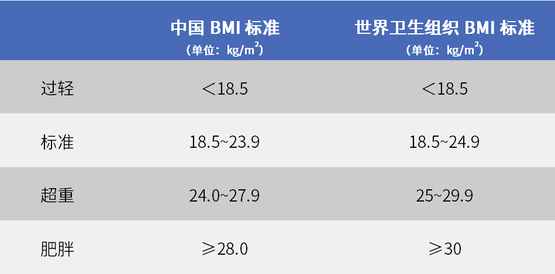
BMI, calculated from weight and height, is a convenient screening measure. It does not show how much of a person’s weight is fat or where that fat is distributed. The researchers tested a combined approach, called CAD-obesity, that uses BMI alongside waist circumference and waist-to-height ratio. The thresholds depend on the BMI range and the population being assessed.
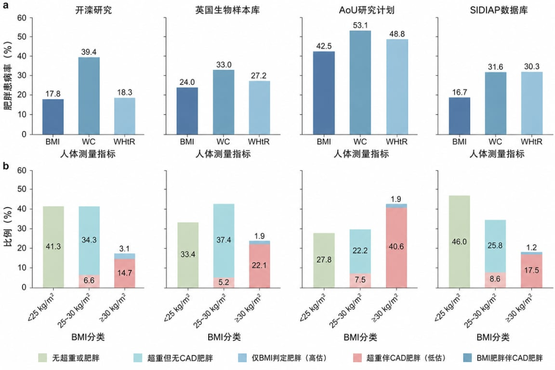
Across the four cohorts, 1.2%–3.1% of participants met a BMI-based obesity threshold but not the corresponding waist-measurement criteria, so they were no longer classified as having obesity under the combined approach. Another 5.2%–8.6% were in the overweight BMI range, below the BMI-only obesity threshold, but met the combined criteria and were newly classified as having obesity. In the Chinese Kailuan cohort, the proportion classified as having obesity rose from 17.8% using BMI alone to 21.3% using the combined approach. The participants’ bodies had not changed; the classification method had.
The study also assessed a proposed distinction between preclinical obesity—excess body fat without current impairment of organ or overall function—and clinical obesity, in which excess body fat is accompanied by impaired function or limitations in daily activity. After statistical adjustment, clinical obesity accounted for 22.7%–31.3% of those classified as having obesity across the cohorts.
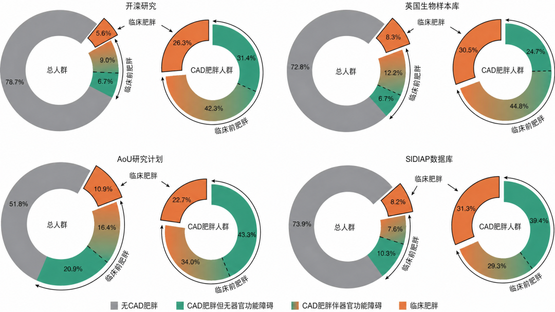
Compared with participants who had neither obesity nor organ-function impairment, those classified as having preclinical obesity had a 19% higher relative risk of death from any cause; for clinical obesity, the figure was 69% higher. These are observed associations, not proof that a classification itself causes the difference in risk.
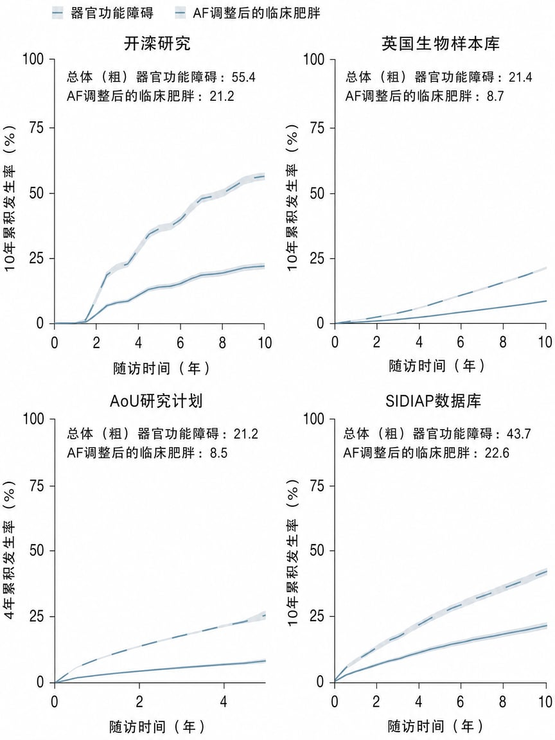
Among participants who initially had obesity without organ-function impairment, the proportion who developed clinical obesity within 10 years was 21.2% in the Chinese cohort, 8.7% in the UK cohort and 22.6% in the Spanish cohort. Most did not make that transition during the period studied, though the findings do not mean preclinical obesity carries no risk.
The research is an initial assessment of this diagnostic framework, not a change to clinical guidelines. BMI remains a useful starting point, but the findings support considering waist measurements and signs of existing health problems rather than treating one number as a complete diagnosis or risk assessment.