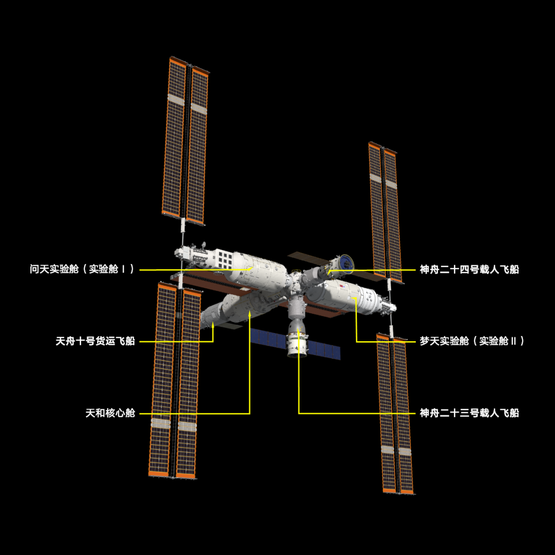
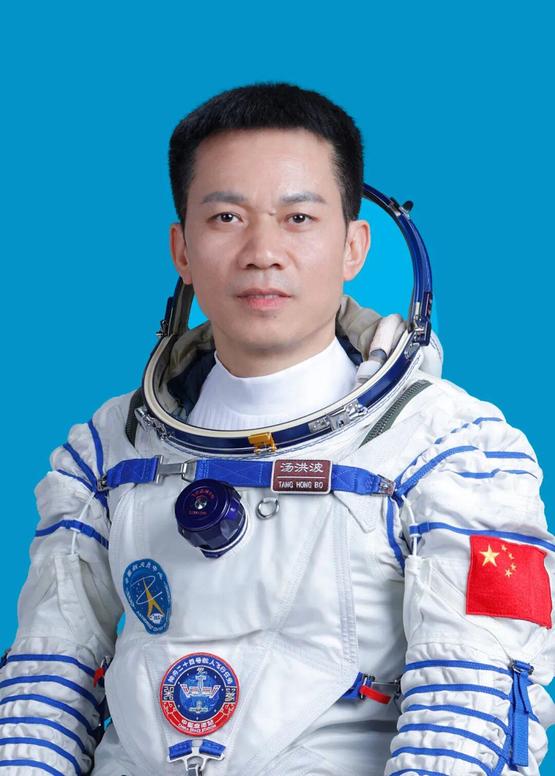
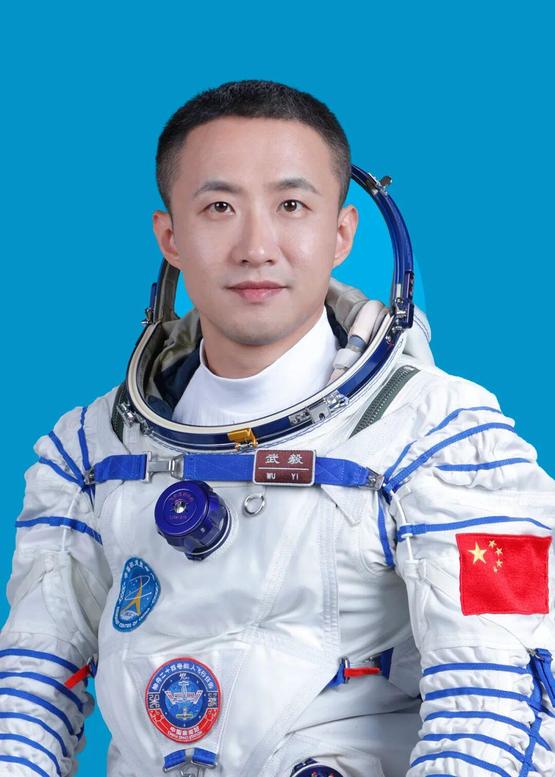
Shenzhou 24 lifted off from the Jiuquan Satellite Launch Center at 8:18 a.m. Beijing time on November 25, 2026, carrying commander Tang Hongbo, flight engineer Wu Yi and Pakistani payload specialist Muhammad Zeeshan Ali. Ali was on course to become the first astronaut from outside China to visit its Tiangong space station.
About 10 minutes after liftoff, the spacecraft separated from its Long March 2F rocket, entered its planned orbit and deployed its solar panels. Docking was still ahead: Shenzhou 24 was expected to complete a 3.5-hour automated rendezvous and reach the forward port of the Tianhe core module around midday. It was the 41st flight in China’s crewed space program and the eighth mission in the station’s application and development phase.
Preparing for a flight in Chinese
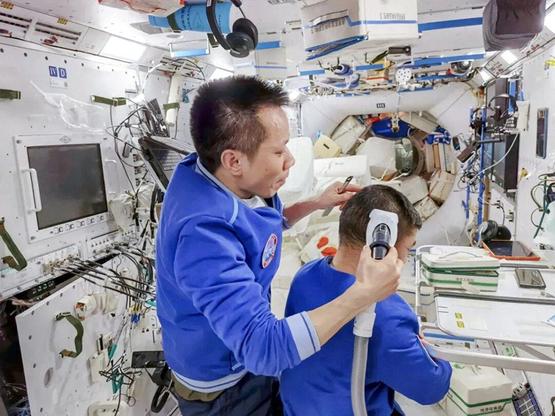
For Ali, a Pakistan Air Force fighter pilot, centrifuge training and emergency procedures were familiar. “But to be honest, the real challenge was mastering Chinese,” he said. Both the spacecraft and the station use Chinese-language interfaces. Tang went through the operations manual and picked out more than 100 frequently used commands to review with him.
China and Pakistan signed an astronaut selection agreement in February 2025. Ali was one of two candidates selected in April 2026. Both arrived in Beijing on April 24 to train with Chinese astronauts. After seven months, Ali could work with his crewmates and carry out procedures in Chinese. During his planned stay of several days, he is to run a joint experiment observing how cyanobacteria grow and behave in weightlessness.
This is the first spaceflight for both Ali and Wu, and the third for Tang. Tang helped commission Tianhe in 2021, when it was the station’s only module. In 2023, he commanded Shenzhou 17 and became the first astronaut to return to Tiangong. Wu, selected in 2020 as part of China’s first astronaut intake to recruit specifically for flight engineers, will help maintain station equipment, including the systems that generate oxygen, remove carbon dioxide and recycle wastewater.
A crew handover with two different timelines
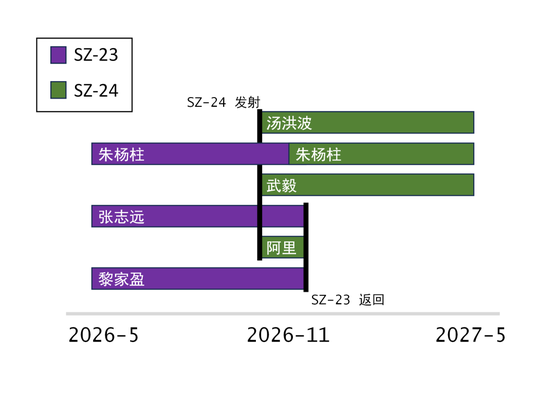
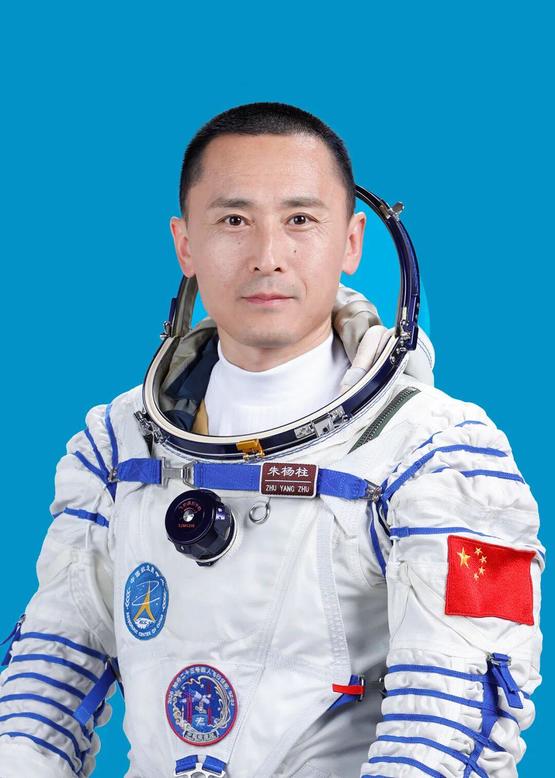
Ali is due to return to the Dongfeng landing site aboard Shenzhou 23 with Zhang Zhiyuan and Li Jiaying. Zhang will command the return flight. Shenzhou 23’s original commander, Zhu Yangzhu, is to stay aboard Tiangong and join Tang and Wu instead. Having arrived in May 2026, Zhu would spend about a year in orbit if the mission proceeds as planned, exceeding the Chinese single-flight record of 210 days set by the Shenzhou 21 crew.
The yearlong stay would be a first for China, not a world first: Russian cosmonaut Valeri Polyakov spent 437 consecutive days aboard Mir in the mid-1990s. Researchers plan to track changes in Zhu’s physical fitness and brain function alongside changes at the cellular and molecular levels. Weight-bearing bones such as the hips and spine can lose about 1% to 1.5% of their bone mass per month in weightlessness. The stay will also test whether Tiangong’s health monitoring, meals, work schedules and psychological support can meet one astronaut’s needs for a full year.

Experiments aboard Tiangong
The Shenzhou 24 mission plan includes 90 scientific experiments and technology tests. One investigation will use fingernail-sized chips containing human cells that mimic aspects of blood vessels and other organs. Researchers hope to learn how the space environment affects vascular aging; the chips model selected structures and functions rather than an entire human body.
Materials experiments will examine single-crystal silicon and perovskites for solar cells, among other materials. Microgravity reduces the rising, sinking and convection that can introduce defects as crystals grow on Earth. During Shenzhou 23, researchers obtained millimeter-scale potassium beryllium fluoroborate crystals aboard the station for the first time and reported improved crystal quality. These crystals can generate deep-ultraviolet laser light.
The crew will also support quantum simulations using cold atoms in optical lattices. Earlier work in the station’s ultracold-atom facility cooled rubidium atoms to 9.7 picokelvin and allowed researchers to observe them for seven seconds. A separate planned investigation will test techniques for measuring motion with a cold-atom interferometer, a possible future tool for precision navigation.