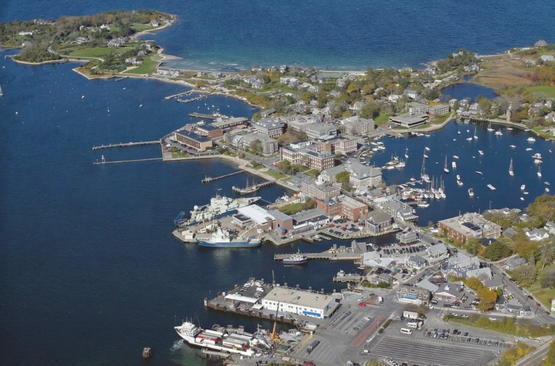
On the southern tip of Cape Cod, Massachusetts, Woods Hole is a small harbor with an unusually large place in the history of biology. The Marine Biological Laboratory (MBL), founded there in 1888, says 63 Nobel laureates have had academic ties to the laboratory—as researchers, teachers or students. That figure does not mean all 63 made their prizewinning discoveries there. About 1,500 scientists and students now gather at MBL each year, according to the original article.
A laboratory beside the sea
Woods Hole gave researchers access to marine animals whose biology could be observed or manipulated in ways that were difficult with other organisms. In a 1988 JAMA report, the laboratory’s marine resources operation was described as sourcing more than 200 kinds of marine life a day for research. Supply was not guaranteed: some animals became harder to catch as waters changed toward the end of summer.
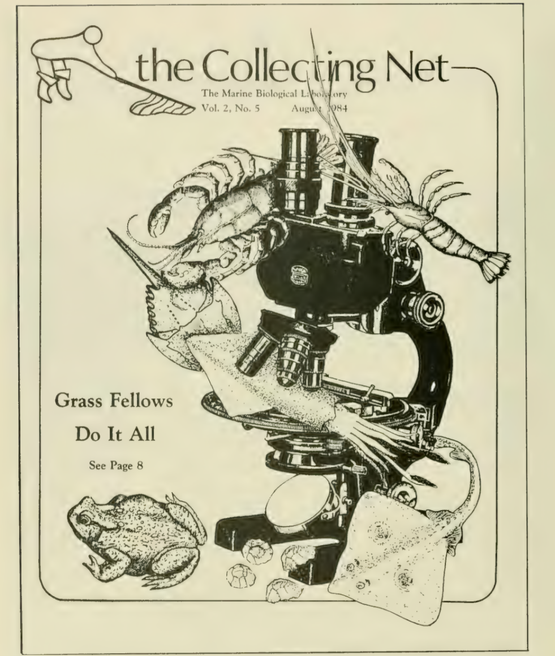
Sea urchin eggs helped Tim Hunt study proteins involved in the cell cycle. During an MBL physiology course in 1982, he observed a protein that repeatedly appeared and disappeared as fertilized eggs divided and named it cyclin. His earlier work with colleagues on clam embryos helped lay the groundwork. Hunt received a share of the 2001 Nobel Prize in Physiology or Medicine.
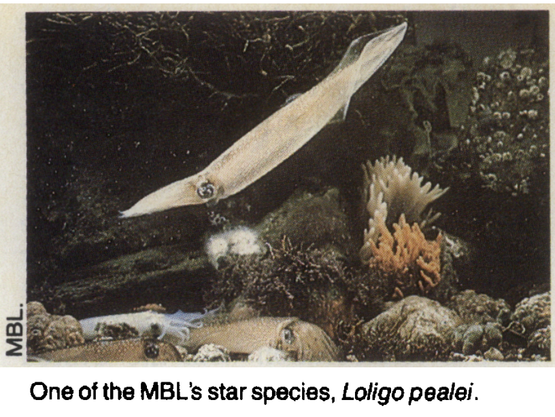
The large nerve fiber of the local longfin squid offered another experimental advantage. In 1938, Alan Hodgkin worked with Kenneth Cole at Woods Hole to learn techniques for studying its giant axon. Subsequent recordings and experiments—including work by Andrew Huxley in Britain—led Hodgkin and Huxley to a model explaining how sodium and potassium ions contribute to nerve impulses. They shared the 1963 Nobel Prize in Physiology or Medicine with John Eccles. The later results should not be mistaken for experiments completed entirely at Woods Hole.
Where conversations became experiments
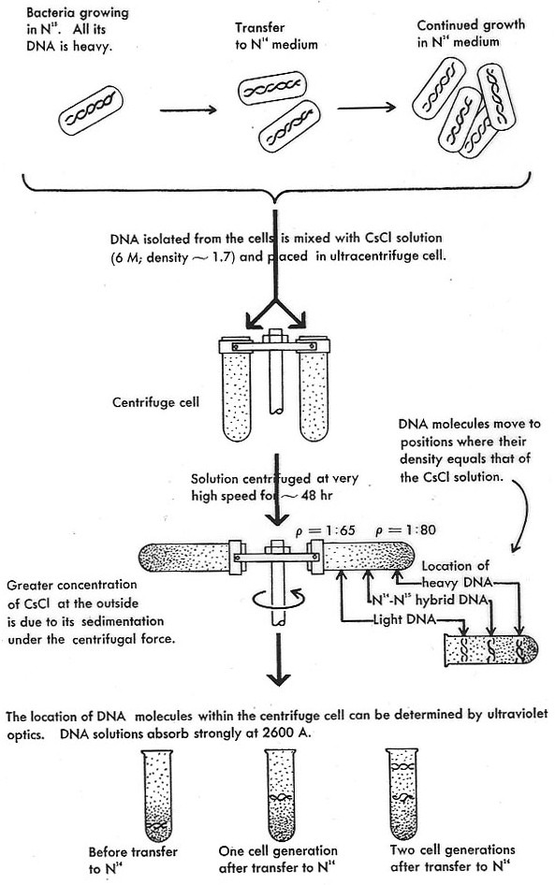
The harbor also brought scientists from different fields together. In the summer of 1954, Matthew Meselson and Franklin Stahl met there and began discussing how to test competing models of DNA replication. They completed their experiment at the California Institute of Technology in 1958, providing evidence that DNA replicates semiconservatively: each new molecule contains one strand from the original molecule and one newly made strand.
For some researchers, Woods Hole was more than a summer workplace. Geneticist Thomas Hunt Morgan began working at MBL in 1890 and spent many subsequent summers there. In August 2025, his descendants buried his and his wife Lilian Vaughan Morgan’s ashes in Woods Hole. Nobel laureate Otto Loewi likewise returned for summers late in life, continuing to talk with younger scientists after his flight from Nazi persecution.
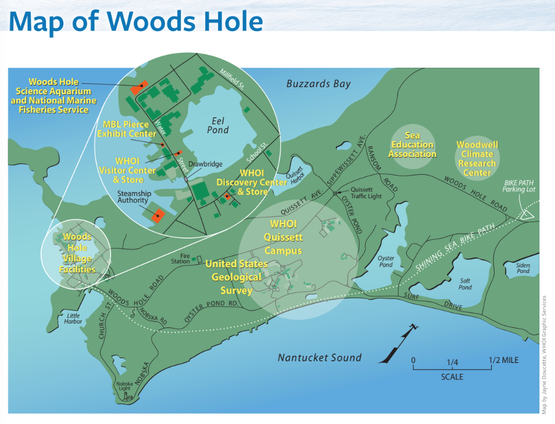
The harbor’s scientific community has since grown beyond MBL to include oceanographic, fisheries and earth-science institutions. Its history illustrates two complementary strengths: ready access to organisms that make biological processes easier to study, and repeated opportunities for researchers to exchange ideas. Neither guarantees a discovery, but both helped make this small harbor a lasting center for science.
Source: guokr.com (originally published 2026-11-12 12:15 UTC+8)