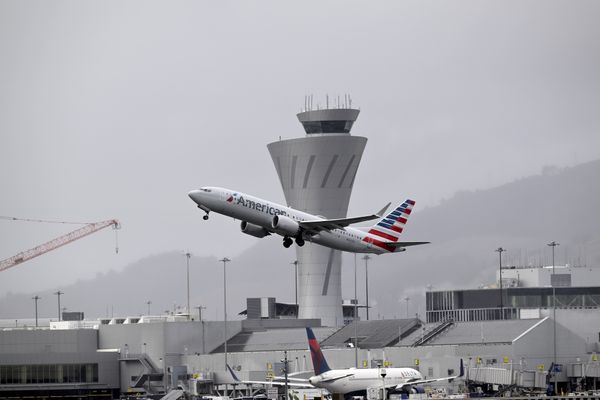
Every plane already airborne during the November 13, 2026, U.S. ground stop landed safely, and no air traffic control center lost contact completely, according to Arnold Barnett, an MIT statistician who studies aviation. His assessment for Thanksgiving travelers was straightforward: commercial flying remained safe. By November 25, he said, roughly 800 million passengers had flown on commercial planes operated by U.S. airlines in 2026, and all had landed safely.
The Federal Aviation Administration (FAA) traced the widespread communications problems that prompted the ground stop to an equipment problem during repairs at a remote facility. The disruption came less than two weeks before what FAA Administrator Bryan Bedford said was expected to be the busiest Thanksgiving travel week in 16 years.
The broader accident figures cover aviation generally, not just commercial airline flights. The National Transportation Safety Board (NTSB) recorded 1,216 aviation accidents through October 2026, down from 1,267 in the same period in 2025. Nonfatal accidents fell from 1,027 to 972, while fatal accidents rose from 240 to 244. In January 2025, an American Airlines flight collided with a military helicopter over Washington, D.C., in the first fatal U.S. commercial plane crash in 16 years. The NTSB has dozens of open safety recommendations following aviation incidents.
David Woods, a U.S. safety systems researcher, said he trusted commercial planes to carry his grandchildren over the holiday. His concern was how officials modernize aging aviation infrastructure. In his view, advances such as artificial intelligence appear to be taking priority over identifying safety needs. He warned against waiting for an accident to reveal a hazard, particularly as new technologies change how the system works.
Najmedin Meshkati, a University of Southern California engineering professor who served on an FAA expert panel after the fatal Boeing 737 MAX crashes in Indonesia in 2018 and Ethiopia in 2019, noted that many accidents happen on runways rather than in the air. He said equipment problems and understaffed control centers can affect safety. Hundreds of FAA workers were laid off in 2025 in cuts related to the U.S. DOGE Service, but the Department of Transportation said those cuts did not include any air traffic controllers. The department has since sought to hire more controllers.
For Meshkati, the reason to examine close calls alongside accidents and equipment failures is what they reveal together: “They are symptoms of how people, organizations and technology interact, and fail to interact, in an overstretched system.”