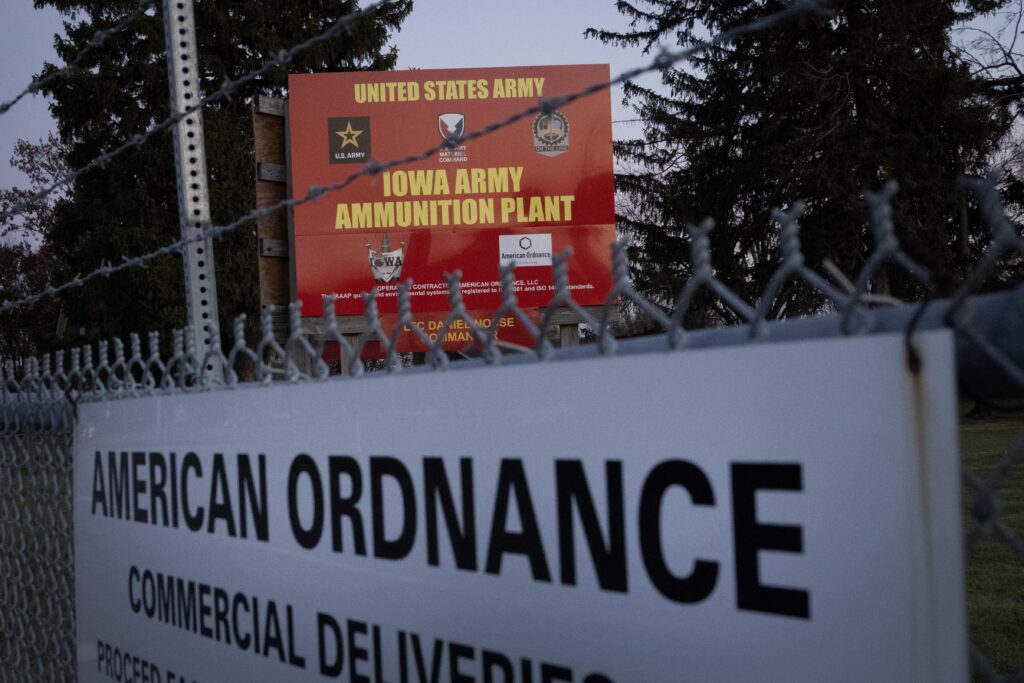
The US Army plans to detonate about 9,700 pounds of aging lead azide at the Iowa Army Ammunition Plant in Middletown at approximately 9 a.m. CST on November 25, 2026. Officials say leaving the stockpile in place risks an uncontrolled explosion. A planned detonation gives the Army a chance to capture some of the lead dust, but its modeling indicates the plume could travel as far as 100 miles. That projection is not a measurement of exposure.
What residents are advised to do
The Iowa Department of Health and Human Services recommends that people in potentially affected areas stay indoors with windows shut for 24 to 48 hours after the detonation. The department advises switching off heating and cooling systems that draw in outdoor air, or setting them to recirculate indoor air. It also recommends using an air purifier with a HEPA filter. The Army has released maps showing the plume’s projected path.
FEMA is helping residents relocate from a voluntary evacuation zone extending five miles from the site. At a November 24 briefing, federal preparedness official Sean Kaufman advised pregnant people, children and people with chronic diseases to evacuate affected areas.
Why the Army ruled out chemical disposal
The stockpile consists of 68 drums of lead azide, formerly used to initiate explosions in munitions. Some of the material is more than 60 years old. Robert Cekada, director of the Bureau of Alcohol, Tobacco, Firearms and Explosives, said the Army had noted deterioration in 2009 but had not found dangerous crystallization then. During a March 2026 inspection, his agency found substantial crystallization on the outside of the drums.
The Army had hired a contractor to dissolve the material but canceled the contract earlier in 2026, according to The New York Times. Army Col. Aaron Teller said the condition of the drums made them too dangerous to open for chemical treatment. Cekada said the experts officials consulted considered a controlled detonation the only safe option.
The Iowa Environmental Council and Sierra Club sought to halt the detonation pending an environmental and health impact statement and an investigation of alternatives. A federal appeals court initially granted a temporary stay but denied the emergency motion on November 23, clearing the way for the operation.
What remains uncertain about lead exposure
The Army’s closest comparison is a 1977 open-air detonation of 7,000 pounds of lead azide in Colorado. Teller said 75 percent of the lead particles remained on site despite the absence of containment measures. In Iowa, the Army expects water barriers, foam and a lead-containment screen to capture more of the particles. Teller said the cracked, 80-year-old storage structures are likely to break open during the blast.
Lead is a neurotoxin with no known safe level of exposure. Children are particularly vulnerable because their brains are developing and because they can ingest dust after touching contaminated surfaces. Most adverse health effects are associated with chronic exposure. Will Sander, an associate professor of preventive medicine and public health at the University of Illinois Urbana-Champaign, told The Verge he considered observable acute symptoms unlikely and did not expect long-term health effects from this event.
Chris Kohler, an Indiana University adjunct instructor specializing in hazardous waste, told The Verge that he considered lead measurements after the earlier detonation low but still hazardous. He and other experts said monitoring at the plant and in surrounding communities after the blast would be important for determining whether further cleanup is needed.