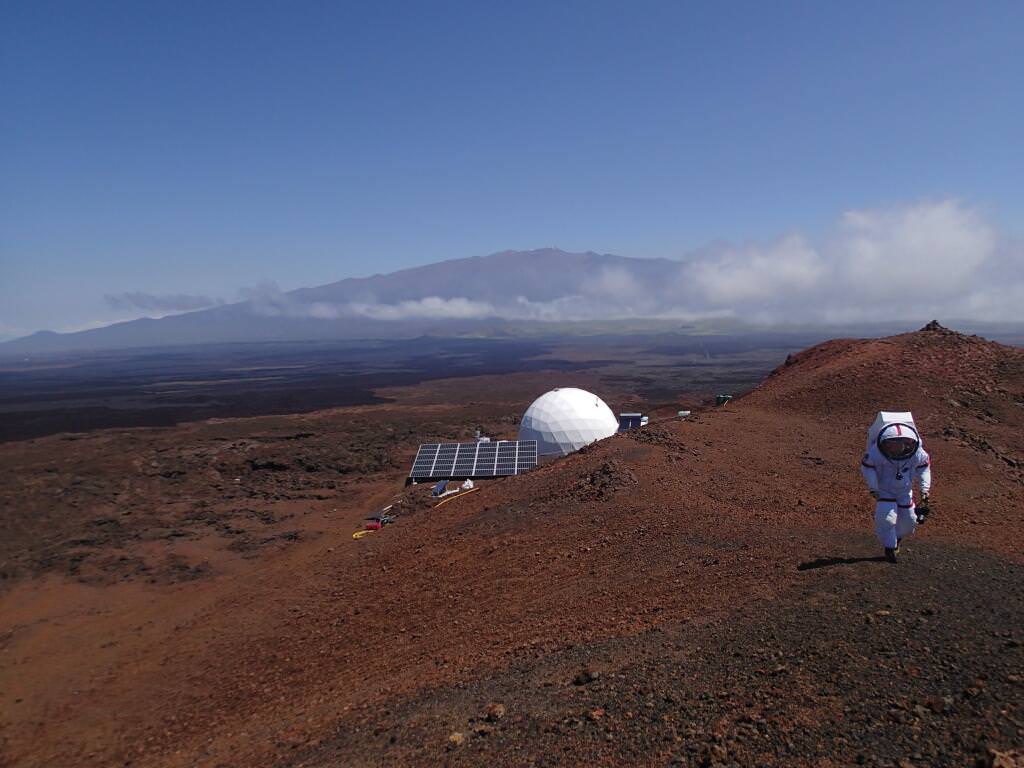
In an uninsulated dome on Mauna Loa in Hawaiʻi, Beth Mund and her crewmates gathered each evening to talk through the day, tell stories and laugh. They had little privacy and no fire, but Mund came to think of the gathering as their “campfire.” On two other simulated space missions, games in a Polish bunker and a shared view through an underwater porthole served much the same purpose.
Mund, a science communicator and former NASA adviser, recounts the three missions in a two-part issue of the Astrosociology Research Institute’s Astrosociological Insights Forum. The issue brings analog astronauts’ firsthand accounts together with commentary from educators, space medics and systems engineers. Its editor-in-chief, Mia Belle Parkinson of the University of Edinburgh, argues that how isolated crews build trust deserves attention alongside propulsion, life support and radiation shielding.
What confinement brought out
Each habitat imposed different constraints. At HI-SEAS in Hawaiʻi, Mund served with an all-female crew during the COVID-19 pandemic. At the LunAres Research Station in Poland, steel doors enclosed a six-person crew in a converted World War II bunker inside a hangar, where sand stood in for lunar soil. At Jules Undersea Lodge in Key Largo, Florida, the only way in or out of the submerged habitat was through a wet room.
Mund identified four recurring features of her experience: improvisation, ritual, continuity and testing. Equipment failures forced crews to devise fixes with what they had on hand. The informal rituals, by contrast, gave them time together that was not organized around a task. In Poland, games offered a break from surveys and the close quarters; underwater, simply looking out of the porthole together became an occasion.
Some of the strongest connections were with people Mund never met. Her crews inherited experiments from earlier participants and left work for those who would follow. “It gave weight to our confinement, transforming it from a private trial into a communal contribution,” she wrote. And while the crews set out to test equipment, plants and methods, Mund found that the missions also tested their own endurance, creativity and ability to work together.

What an Earth analog can show
NASA’s Apollo geology field trips, held between 1964 and 1972, used sites on Earth to prepare astronauts to examine lunar terrain. The Tektite underwater missions in 1969 and 1971 addressed a different question: how people behave in a confined, isolated habitat. That second question is central to astrosociology, the study of social, cultural and behavioral aspects of human activity related to space. Jim Pass founded the Astrosociology Research Institute in 2008 to develop the field.
Mund’s account is testimony from a participant, not a controlled comparison of crews. It cannot establish that a lunar or Martian crew would develop the same habits. What it documents is how people in three very different settings made room for one another, both during their own mission and through the work they passed to the next crew.