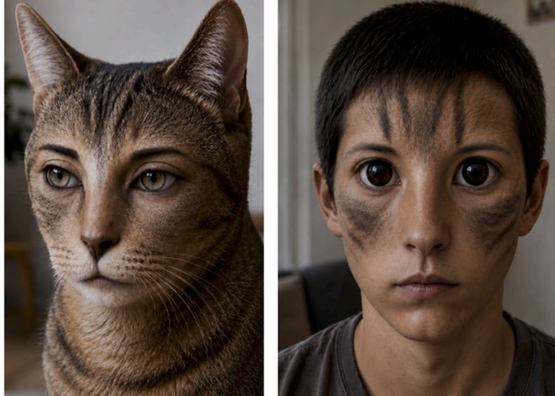
After surgery to remove an arteriovenous malformation from the back of his right temporal lobe, a 28-year-old man named Carl began seeing facial features appear on other faces. If his gray tabby cat, Luna, was the first face he saw in the morning, he might later see her eye shape, enlarged pupils and surrounding markings on a person. The effect usually lasted hours, but sometimes persisted all day.
Brad Duchaine, a professor of psychological and brain sciences at Dartmouth College, and colleagues reported Carl’s case. His symptoms include palinopsia, in which something previously seen persists or reappears in visual experience. They also relate to prosopometamorphopsia (PMO), a condition in which faces appear distorted or altered.
To depict Carl’s experience, the researchers used AI to generate images of human eyes on Luna’s face and cat eyes on a human face. Carl reviewed the images, and they were revised over several months until he felt they came close to what he saw. These are AI-generated reconstructions based on his account, not photographs of a visual effect.
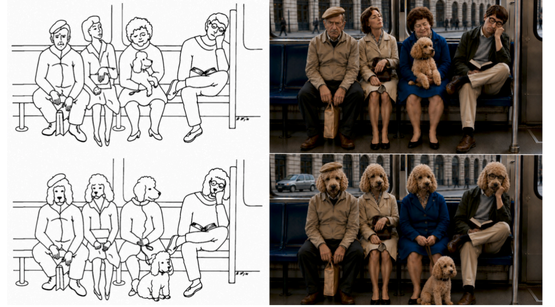
The case recalls a report published in Cortex in 1986: nine months after a stroke, a woman saw the face of a poodle carried by a bus passenger appear on other passengers’ faces. That effect lasted about half an hour. Duchaine’s team also made an AI-generated illustration of the episode, but the woman did not confirm it, so its accuracy is unknown. Unlike her account of whole dog faces, Carl usually sees transferred parts of a face.
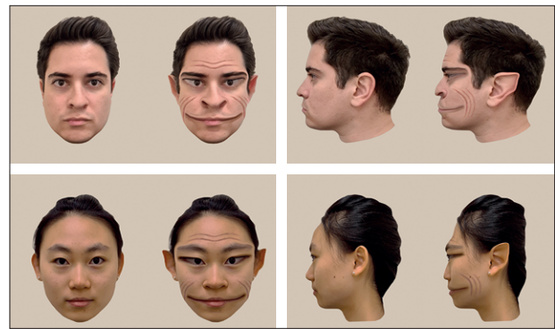
A different PMO case, published in The Lancet in 2024, involved a 58-year-old man who saw severe distortions on real people’s faces but not in photographs of those same people. Researchers used that difference to edit photographs in consultation with him, approximating what he saw. He could still identify people, although a computer test found mild impairment in facial identity recognition. He had a history of head injury, possible carbon monoxide exposure and a suspected arachnoid cyst near his left hippocampus; the researchers could not establish what caused his symptoms.
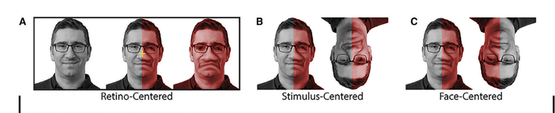
Together, these cases suggest that perceiving a face’s appearance and identifying its owner are not identical processes. Researchers have proposed ways the brain might combine information from different parts of a face, but how remembered features become part of a currently seen face remains unclear.
Source: guokr.com (originally published 2026-11-13 17:15 UTC+8)