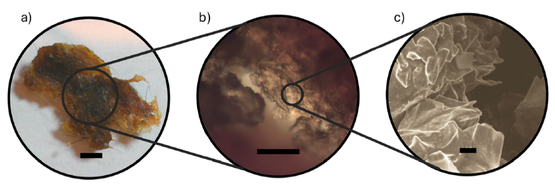
Earwax may do more than trap dust. In a study published in Soft Matter in October 2026, a Georgia Institute of Technology team tested how it affects fire ants and examined its physical properties. The findings suggest several ways earwax could impede an insect, but the experiments do not establish how well it protects living ears.
The researchers collected 36 earwax samples from humans, pigs, sheep, dogs, cows and rabbits. They found that earwax formed a porous layer around hairs in the ear canal. Across the species sampled, its density was approximately 0.86 grams per millilitre.
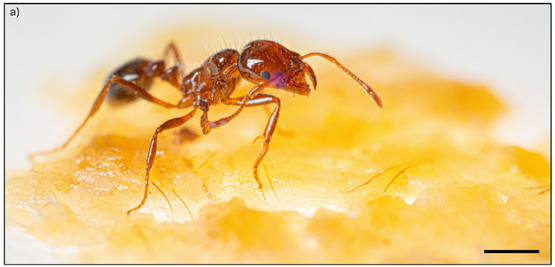
In one experiment, more than 100 ants escaped a clean glass beaker within 10 minutes. When the beaker wall had a 0.5-millimetre band of earwax, 100 ants still escaped, but took three hours. In a separate test using a smoothed, 0.01-millimetre layer, 48% of the ants had not crossed after two hours. The team also measured adhesion from a single ant foot at 150 micronewtons on glass, compared with 1.5 micronewtons on earwax.
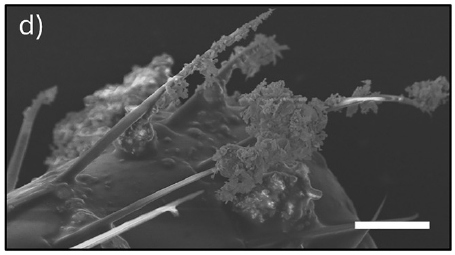
The researchers propose that earwax’s microscopic pores interfere with the liquid ants use to grip surfaces. Earwax also clung to ants that contacted it: after crossing it, they spent an average of 125 seconds grooming during the following 180 seconds. These observations support a possible physical barrier, rather than proof of a universal insect defence.
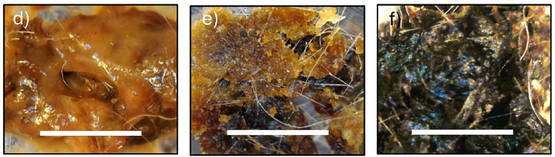
The study also tracked drying. Fresh earwax contained about 30–35% liquid; after 10 weeks exposed to air, that proportion fell to nearly zero, while sealed samples changed little. Below 18% liquid content, compressed earwax fractured instead of flowing. The authors relate this change to the outward movement of skin in the human ear canal, which could help carry earwax toward the opening before it flakes away.

As a preliminary materials test, the team made an artificial earwax from chitosan fibres and polyethylene glycol. None of five ants escaped from beneath foil coated with it within 50 seconds. The authors suggest the work could inform insect barriers, but they tested ants—not the many other insects and arachnids that might enter an ear. Their proposed explanation for similarities between species’ earwax also remains speculative.
Original article: Guokr (by 圆的方块; edited by 黎小球). Research cited there: Ancalle D. S. et al., “Earwax as pest control,” Soft Matter (2026), 22: 6884–6897.